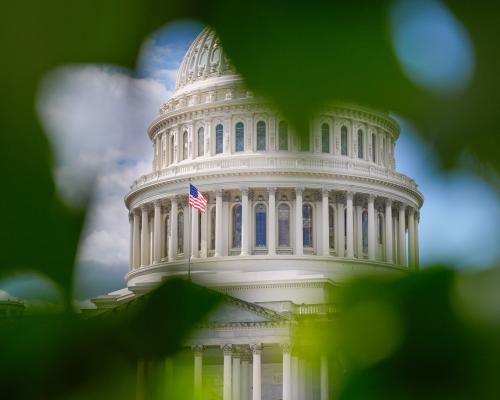
A partial U.S. government shutdown has forced a delay in the announcement of the 2026 cost-of-living adjustment (COLA) for Social Security and Supplemental Security Income (SSI). The shutdown has suspended the release of critical consumer inflation data by the Bureau of Labor Statistics (BLS), which the Social Security Administration depends upon to compute the COLA. Because of the freeze, beneficiaries must wait longer than usual for clarity on their 2026 benefits.
Typically, the September Consumer Price Index (CPI) figures are essential inputs in formulae that set benefit increases. But with the BLS unable to publish them amid the funding impasse, the COLA process has been held up. Even if the government reopens soon, the backlog of data to process will impose further lags. In 2025, beneficiaries saw a 2.5 % increase in COLA. Some forecasts now project a 2.7 % rise for 2026, which would lift the average monthly retiree benefit from about $2,008 to $2,062.
The delay carries real consequences. Retirees, disabled beneficiaries, and low-income households that rely on SSI often plan yearly budgets based on expected benefit increases. Without timely announcements, financial stress may mount. Moreover, the suspension of other economic data releases—such as employment, inflation trends, and consumer spending—weakens market transparency. Investors, businesses, and policymakers face increased uncertainty just when clear signals are most needed.
Analysts warn that the opacity introduced by the shutdown could also erode confidence in government agencies and their ability to respond. Delayed economic reporting may impair fiscal and monetary responses to emerging weakness or inflationary trends. The cumulative impact could ripple through markets, consumer sentiment, and even credit decisions.
Beyond the COLA postponement, the shutdown is choking off broader economic data flow. Monthly employment and CPI reports remain unpublished, which obscures the true state of labor markets and price pressures. Without fresh data, the Federal Reserve and Congress risk misjudging the economic trajectory.
The Treasury and other agencies have also curtailed nonessential operations. Furloughs have spread across federal departments. Programs ranging from regulatory oversight to grants and infrastructure spending have gone idle or slowed. That introduces ripple effects into industries and local economies tied to government contracts or federal funding.
Economists estimate that the longer the shutdown continues, the larger the drag on GDP. Some models project losses in the billions per week, due to halted spending, reduced federal payrolls, and lower consumer activity. Even after reopening, recovery would not fully offset lost output and confidence.
Further risk arises from compounding uncertainty. Investors may demand higher yield premiums, credit agencies may reassess risk, and households may pull back on spending. In such fragile conditions, a misstep or shock could trigger a sharper slowdown.
The shutdown also signals political stalemate, which may diminish trust in governance. For markets, the political risk premium might be repriced upward, affecting borrowing costs and capital allocation. In short, what began as a funding impasse now threatens to amplify into a wider economic drag.