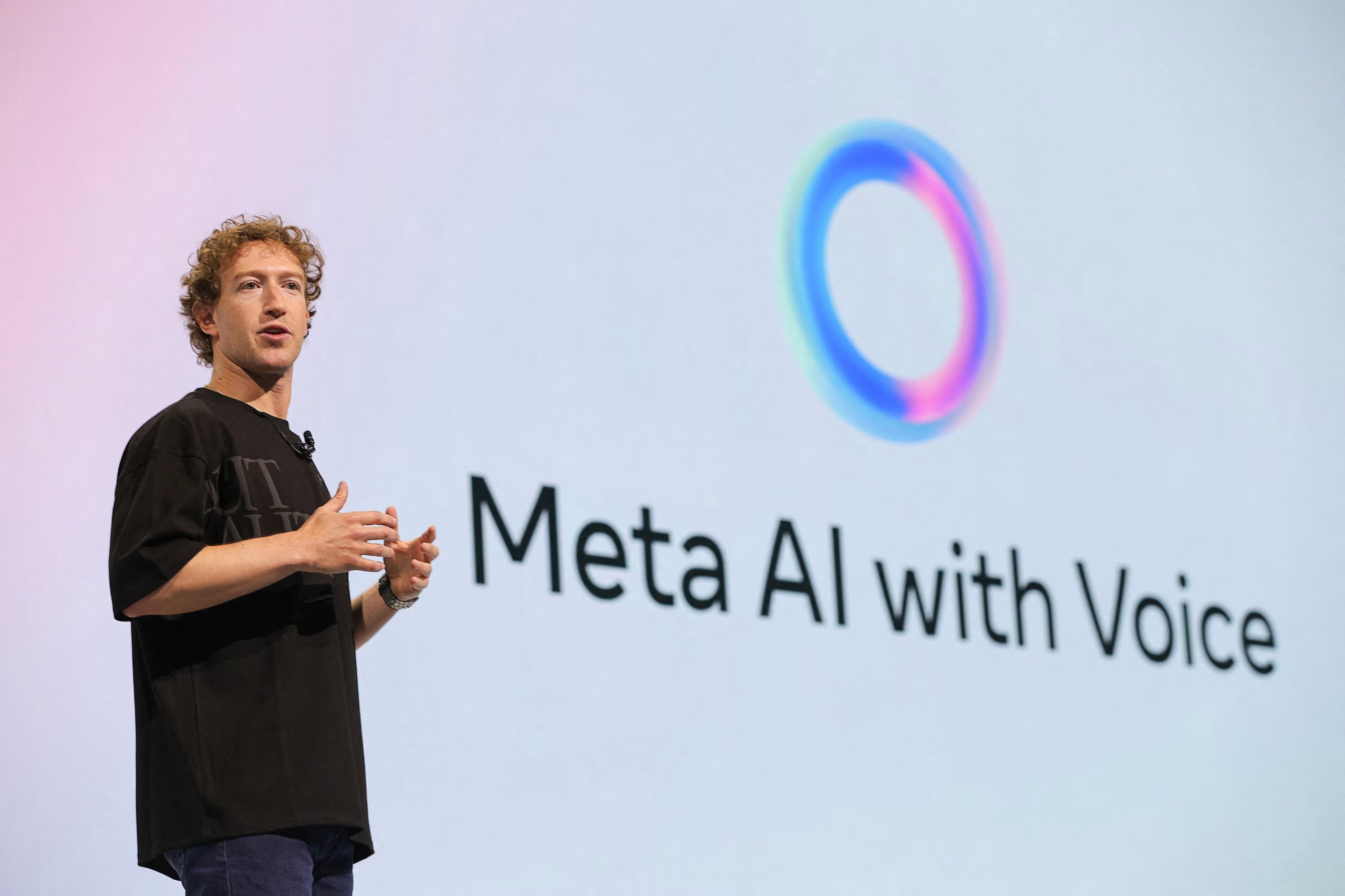
Meta, the tech giant known for its social media platforms, has made a bold move to accelerate its artificial intelligence (AI) ambitions by hiring Alexandr Wang to lead Meta’s Superintelligence Labs. Wang, the 28-year-old founder of Scale AI, a company renowned for its AI data labeling services, is now tasked with heading Meta’s latest initiative to push the boundaries of AI and develop artificial general intelligence (AGI).
With an investment of $14.3 billion, Meta’s Superintelligence Labs aims to make groundbreaking strides in AI research, focusing on building systems capable of reasoning, learning, and problem-solving in ways that mimic human intelligence. This new direction marks a pivotal moment in Meta’s transformation from a social media company to a leader in advanced AI technology.
Who is Alexandr Wang?
Before stepping into his role at Meta, Alexandr Wang was already a well-respected figure in the AI industry. As the CEO and co-founder of Scale AI, Wang developed a company that revolutionized the process of data annotation, a crucial task in training AI models. Scale AI has played an instrumental role in providing AI companies with the high-quality, labeled data necessary for machine learning. This expertise caught the attention of Mark Zuckerberg, who recognized Wang’s potential to lead Meta’s AI division.
Background and Achievements:
- Early Career: Wang dropped out of MIT at age 19 to pursue his entrepreneurial ambitions. He founded Scale AI in 2016, driven by his vision to improve data labeling processes for AI training.
- Scale AI’s Impact: Scale AI has become one of the leading data annotation companies, partnering with top tech firms like Google, Tesla, and Meta.
- AI Leadership: Wang’s leadership at Scale AI established him as a visionary in AI development, which ultimately led to his hiring by Meta in 2025.
With his deep understanding of AI and machine learning, Wang’s transition to head Meta’s Superintelligence Labs marks a natural next step in his career, one that aligns with his long-standing vision to develop smarter, more capable AI systems.
Meta’s Vision for Superintelligence Labs
Meta’s new Superintelligence Labs will focus on developing the next generation of AI technologies, specifically artificial general intelligence (AGI). Unlike narrow AI, which is designed to perform specific tasks, AGI is a form of AI that can understand and perform any intellectual task that a human can. This ambitious goal represents a massive leap in Meta’s ongoing AI strategy.
Meta’s Superintelligence Labs Focus:
- Developing AGI: Meta’s goal is to create machines capable of understanding context, reasoning, and making decisions independently. This is a key differentiator for AGI compared to current AI systems that excel in specific tasks but lack broader cognitive abilities.
- AI Ethics and Responsibility: Meta is committed to developing AI systems that are safe, transparent, and ethical. Wang and his team will focus on ensuring that AGI systems adhere to high standards of fairness and accountability, mitigating the risks of bias and misuse.
- Real-world Applications: The long-term vision for Meta’s Superintelligence Labs includes integrating AGI into Meta’s platforms, including Facebook, Instagram, and the Metaverse. This integration could revolutionize how users interact with technology and each other.
Meta’s aggressive push into AGI research under Wang’s leadership is a strategic move to maintain competitiveness in the rapidly advancing AI landscape, positioning the company to take a leading role in AI development over the next decade.
The $14.3 Billion Investment and Its Implications
In order to make this vision a reality, Meta has pledged a substantial investment of $14.3 billion into its Superintelligence Labs. This commitment will fund extensive research, product development, and the creation of the infrastructure necessary for developing AGI. It also signals Meta’s intention to stay ahead of the curve in the AI race, particularly with competitors like OpenAI and Google DeepMind making significant strides in the same field.
Key Implications of the $14.3 Billion Investment:
- AI Research Acceleration: The funding will allow Meta to push forward at an accelerated pace, ensuring that breakthroughs in AGI technology are reached as soon as possible.
- Talent Acquisition and Expansion: Meta will be able to attract top-tier AI researchers and engineers from around the world, expanding its team of experts working on AGI.
- Competition with Industry Leaders: With this investment, Meta is directly competing with other AI leaders like OpenAI, Google, and Amazon, all of whom are heavily invested in AGI and AI research.
The investment underscores Meta’s dedication to becoming an AI powerhouse, with AGI at the center of its strategic ambitions.
The Challenges Ahead for Meta’s Superintelligence Labs
Despite the excitement surrounding the launch of Meta’s Superintelligence Labs, there are several challenges that Wang and his team will need to overcome to achieve success in AGI development. Building machines that can reason, think critically, and perform tasks autonomously presents significant technical hurdles.
Key Challenges:
- Ethical AI Development: AGI raises a host of ethical questions, including concerns about AI autonomy, the impact on jobs, and ensuring that AI systems operate transparently and without bias.
- Technical Complexity: Developing AGI systems is an extremely complex task that requires advancements in areas such as machine learning, neuroscience, and cognitive science. Meta’s team will need to overcome these obstacles to make AGI a reality.
- Regulatory Scrutiny: As AI continues to advance, governments and regulators are paying closer attention to the potential risks of AGI. Meta will need to navigate this regulatory landscape carefully to avoid backlash and ensure compliance with global standards.
These challenges will require Wang’s leadership to balance innovation with caution, ensuring that Meta’s AI development is both cutting-edge and responsible.
The Future of AI Under Alexandr Wang’s Leadership
As Alexandr Wang takes the reins of Meta’s Superintelligence Labs, the future of AI at Meta looks promising. Wang’s leadership will guide Meta in creating more advanced and capable AI systems, which will be integrated across Meta’s suite of products and services. The work being done at Meta could have far-reaching implications for industries ranging from entertainment and healthcare to education and business.
Wang’s Key Focus Areas:
- Human-centered AI: Wang has always advocated for AI that enhances human abilities and supports societal well-being. This vision will likely guide his work at Meta, ensuring that AI systems are developed with people’s best interests in mind.
- Breakthrough Innovations: Meta’s Superintelligence Labs will be at the forefront of AGI research, exploring new techniques and algorithms that could lead to significant breakthroughs in machine intelligence.
- Long-term Impact: The goal is to create AI systems that can solve complex global challenges, from climate change to disease prevention, and improve everyday life for individuals around the world.
Under Wang’s guidance, Meta’s Superintelligence Labs is positioned to make a lasting impact on the AI field, pushing the boundaries of what is possible in artificial intelligence.
What’s Next for Meta and Alexandr Wang?
The appointment of Alexandr Wang to lead Meta’s Superintelligence Labs marks a new chapter in Meta’s pursuit of artificial general intelligence. With a $14.3 billion investment backing his efforts, Wang has the resources to push the boundaries of AI development and bring AGI closer to reality. While significant challenges lie ahead, Wang’s leadership and Meta’s commitment to ethical AI development will likely steer the company toward achieving its ambitious goals.
As the world watches Meta’s progress, the future of AI looks brighter than ever. With Meta’s Superintelligence Labs at the helm, we can expect innovations that will shape the way we interact with technology for years to come.