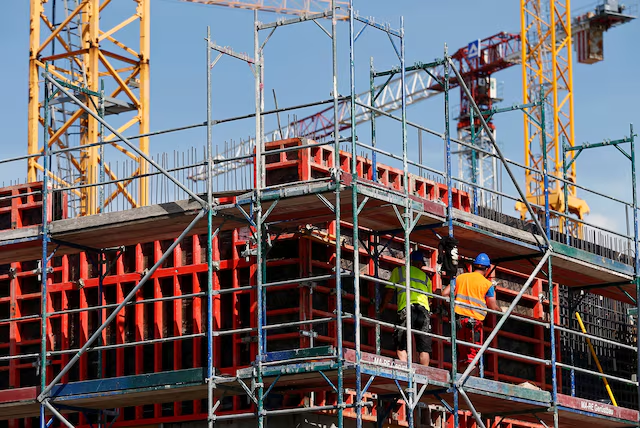
BERLIN — The number of permits for housing construction in Germany rose in 2025 for the first time after three consecutive years of decline. Data released Wednesday by the German Statistics Office shows a significant rebound in approvals. Permits were granted for the construction of 238,500 residential units across new and existing buildings last year. This represents a 10.8% increase compared to 2024, when permits fell to their lowest level since 2010.
The reported number of building permits serves as an early indicator of future construction activity. Rising interest rates and high material costs had weighed heavily on the industry in recent years. The turnaround in 2025 suggests improving conditions for developers and homebuilders. Industry observers are watching closely to see if this momentum can be sustained.
Industry Leaders Express Cautious Optimism
German Minister for Construction Verena Hubertz welcomed the new data with optimism. She noted that sentiment within the construction sector has improved noticeably. Investments are also showing positive trends after a prolonged slump. Hubertz attributed the rebound to specific policy measures implemented by the government.
A reduction in bureaucracy has helped streamline the approval process for new projects. Subsidy programmes have also provided financial support to developers and homebuyers. The minister expressed confidence that these factors will ensure continued positive trends through 2026. Her comments reflect government hopes that the construction sector can help drive broader economic recovery.
Economic Experts See a Turning Point
The German Macroeconomic Policy Institute, known as IMK, offered a strongly positive assessment of the new figures. The trade union-affiliated research body described the increase in housing construction permits as a clear signal of market turnaround. Sebastian Dullien, the institute’s Scientific Director, provided a bold assessment of the sector’s trajectory.
“The construction industry is now going from a brake on growth to a driver of it,” Dullien stated. This characterization marks a significant shift in perception. The construction sector has dragged on German economic performance in recent years. High interest rates and material costs discouraged new projects and slowed approvals. The 2025 data suggests these headwinds may be easing.
Industry Association Urges Caution on Interpretations
The German construction industry association offered a more measured response to the statistics. Tim-Oliver Mueller, the association’s chief, warned against premature enthusiasm regarding the numbers. He pointed to a critical distinction between approvals and actual construction activity.
“Not everything that is approved will actually be built,” Mueller cautioned. This warning highlights ongoing challenges in the sector. Developers may secure permits but still face financing difficulties or construction cost issues. Economic uncertainty could still derail projects even after approval is granted. The association wants to ensure that policy responses address real-world construction barriers.
Persistent Housing Shortage Remains a Challenge
Despite the positive movement in housing construction permits, Germany continues to face a severe housing deficit. A spring report from real estate experts projects that just over 200,000 new residential units will likely be built this year. This forecast suggests a gap between approvals and completions.
A comprehensive study by the Pestel Institute quantified the scale of Germany’s housing crisis. The research identified a shortage of 1.4 million homes across the country. This deficit affects both rental and ownership markets. It contributes to rising housing costs and increased competition for available units. Major cities face particularly acute pressure.
Long-Term Targets Remain Distant
To reduce the housing deficit by 2030, Germany would need to construct approximately 400,000 new homes each year. The 2025 figure of 238,500 permits, while improved, remains well below this target. Even if all approved units are completed, the annual production would only reach about 60% of what experts say is necessary.
The gap between current construction levels and long-term needs poses significant policy challenges. Meeting the 400,000 annual target would require sustained growth in housing construction permits for several years. It would also demand that approval rates translate reliably into completed projects. The construction industry would need to expand its capacity significantly.
Factors Driving the Rebound
Several factors contributed to the increase in housing construction permits during 2025. Interest rates stabilized after several years of aggressive increases by the European Central Bank. This provided more certainty for developers calculating project feasibility. Material costs also showed signs of moderating after pandemic-related spikes.
Government initiatives played a supporting role in the recovery. Streamlined approval processes reduced delays for developers seeking permits. Subsidy programmes targeted both affordable housing projects and energy-efficient construction. These measures helped offset some of the financial pressures on the industry.
Regional Variations in Permit Activity
The national figures on housing construction permits mask significant regional variations. Urban centers like Berlin, Munich, and Hamburg continue to see strong demand but face land scarcity. Rural areas have more available space but weaker population growth and economic activity. These disparities complicate efforts to address the national housing shortage.
Some German states have implemented more aggressive permitting reforms than others. Regions with streamlined processes have generally seen stronger growth in approvals. This suggests that administrative factors play a meaningful role in construction activity. Other states may look to these examples for policy inspiration.
Outlook for 2026 and Beyond
The construction ministry expects the positive trend in housing construction permits to continue through 2026. Planned policy initiatives aim to further reduce regulatory burdens on developers. Additional subsidy funding may become available as the government prioritizes housing affordability.
However, risks to the outlook remain significant. Global economic conditions could deteriorate, affecting financing availability. Construction costs could rise again if supply chains face new disruptions. Labor shortages in the construction trades could limit the industry’s capacity to expand. The coming months will reveal whether the 2025 rebound represents a sustainable recovery or a temporary improvement.