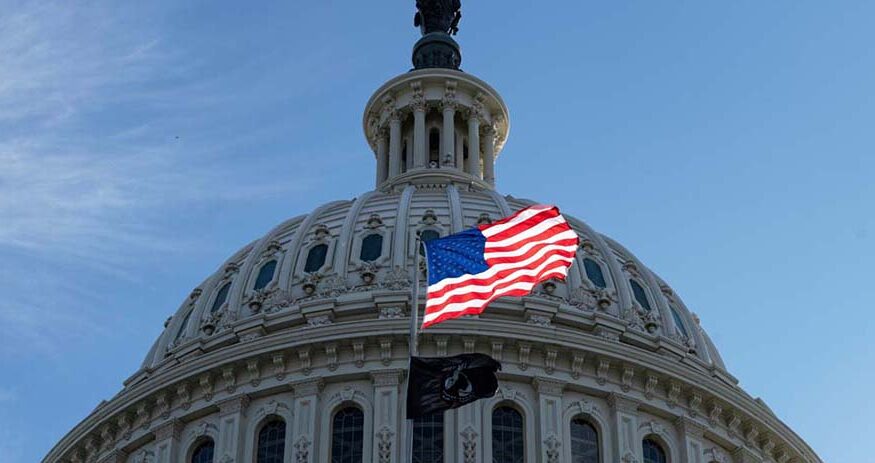
When you look up at the American flag waving above a stadium, a school, or someone’s front porch, it feels simple — a clear, familiar symbol of patriotism, unity, and history. But when you speak to the men and women who actually make those flags — the ones who cut, sew, and stitch them together — the meaning grows far deeper.
Their voices tell a richer story: pride and gratitude mixed with struggle, contradiction, and longing. The flag, for them, isn’t just a national emblem. It’s a canvas that carries both dreams and dissonance — their personal stories stitched into the nation’s broader one.
Sewing Stars and Stripes: Who Are the Makers
In Oak Creek, Wisconsin, the hum of sewing machines fills the factory floors of Eder Flag, the largest U.S. manufacturer of American flags. Nearly 200 people — locals, immigrants, and refugees — come together to produce more than five million flags each year.
Some of these workers fled war zones or political persecution. Others left behind their homes in search of a life of safety and stability. Now, in a twist of fate, they make the flag that represents freedom, resilience, and the promise they chased.
At Annin Flagmakers in Virginia — the oldest flag manufacturer in the country, founded in 1847 — that same sense of continuity runs through generations. “Every single flag carries meaning,” says Mark Layne, who has worked there for over two decades. His hands fold cloth, align stripes, and inspect seams. “You never forget that someone’s going to raise this flag in pride — or maybe in grief.”
These makers form the unseen backbone of America’s most recognized symbol. Many of them have complicated relationships with the flag they create, yet their craftsmanship ensures that it endures — through celebrations, protests, and memorials alike.
Freedom and Belonging
For many flag makers, the flag embodies something deeply personal: the freedom to exist, to speak, and to rebuild.
At Conder Flags in Charlotte, Barry Austin, the general manager, describes the flag as “a living emblem of what we can be — free to agree, free to disagree, and still one people.”
At Eder Flag, Radica, a Serbian immigrant, recalls escaping the turmoil of the Yugoslav wars before finding work in Wisconsin. “I sew freedom every day,” she says quietly. For her, stitching the flag isn’t just labor; it’s an act of gratitude — a way to repay the country that offered her peace.
Ali, a former translator from Iraq who risked his life assisting U.S. soldiers, feels the same. “When I see the flag I made flying,” he says, “I remember what I left behind — and why I came.”
These personal histories turn each flag into more than fabric and thread. They transform it into testimony — a physical manifestation of survival and hope.
Unity — And Its Limits
To many makers, the flag symbolizes unity — but also a reminder of how fragile that unity can be.
Layne from Annin Flagmakers says he takes pride in knowing that the flags he produces appear at both baseball games and protest marches. “The flag doesn’t pick sides,” he reflects. “It’s supposed to belong to everyone.”
But not everyone feels included in that promise. SugarRay, a Black worker at Eder Flag, puts it plainly: “I love my country, but sometimes the country doesn’t love us back.” After witnessing police violence and racial injustice, he says he still feels pride when seeing the flag, yet he hesitates to fly one himself — wary of how others might interpret it.
This paradox — loving what the flag should stand for while questioning what it does stand for — defines many of the people who make it. For them, patriotism isn’t blind devotion; it’s perseverance through contradiction.
History, Memory, and Identity
For the older flag factories, every banner sewn carries echoes of history. At Annin, workers can recite where their flags have flown: on Iwo Jima in World War II, at Lincoln’s funeral, at Ground Zero after 9/11. Those stories bind them to moments of collective grief and courage.
At Eder Flag, the workforce’s diversity creates a living mosaic of America itself. Workers speak different languages — Arabic, Spanish, Bosnian, English — yet their labor interlaces those differences into a shared emblem. “Every star, every stripe,” one worker says, “is a story of someone who came here to be part of something bigger.”
The flag’s meaning, then, becomes not static but evolving — constantly redefined by the people who craft it and the moments that test it.
The Tension Behind the Symbol
The makers often confront how the flag’s meaning changes with the times — and not always in comforting ways.
When protests erupted after George Floyd’s death or following the January 6 Capitol attack, Eder Flag workers reported conflicting emotions. Their work symbolized ideals — justice, unity, democracy — yet the nation seemed divided on what those words truly meant.
Some felt pride seeing their flags raised at peaceful protests; others felt anguish seeing them waved amid violence. As one worker put it: “It’s hard when your product means freedom to one person and oppression to another.”
Still, despite that dissonance, they keep sewing. To them, the act of making the flag is a quiet form of faith — a belief that the symbol can still carry the nation toward something better.
The Ritual of Making
Flag-making is precise, rhythmic, and communal. It takes about ten people to complete one of Eder’s large outdoor flags. Every step matters — cutting, stitching, hemming, and inspecting.
The Annin team still uses “Old Red, Old White, and Old Blue,” ensuring every hue matches the historical palette. Durability is key — each flag must withstand wind, rain, and time. “You don’t just sew fabric,” says Layne. “You sew memory.”
Many makers describe their work as sacred. They know that their flags will drape a soldier’s coffin, hang in a school hallway, or flutter above a family home. That awareness infuses the work with reverence — and responsibility.
What They Hope For
As America nears its 250th anniversary, flag makers express a collective hope: that the Stars and Stripes will once again stand for unity, not division.
They hope the flag can mean:
- Respect beyond ritual — more than just salutes and holidays, it should inspire justice and integrity.
- Honest remembrance — embracing both triumphs and wrongs in the nation’s history.
- Empathy — understanding that many who make the flag are immigrants or minorities whose stories enrich its meaning.
- Inclusion — that the flag might one day represent every American equally, in both pride and protection.
Lessons from the Makers
From their stories emerge deeper truths:
- Symbols need people — without those who create and believe in them, they lose power.
- Patriotism is complex — love of country can coexist with critique and struggle.
- Unity takes effort — it’s something we build, not something we inherit.
- Diversity strengthens symbols — the flag gains meaning through the many hands that make it.
- Faith in ideals matters — even when the country falters, continuing to sew the flag is an act of belief in its potential.
Conclusion
The American flag means many things to many people. For those who sew it — stitch by stitch, stripe by stripe — it means more than a symbol of the state. It means belonging, contradiction, resilience, and hope.
Each flag they make carries countless invisible stories — of immigrants chasing freedom, of workers fighting for dignity, of citizens striving to make the nation live up to its ideals.
As one flag maker said, “We don’t just sew flags. We sew dreams — and we hope they hold.”
In that way, every flag waving over a home, school, or stadium is not just a piece of cloth. It’s a testament — that the people who built it still believe the country it represents is worth mending.