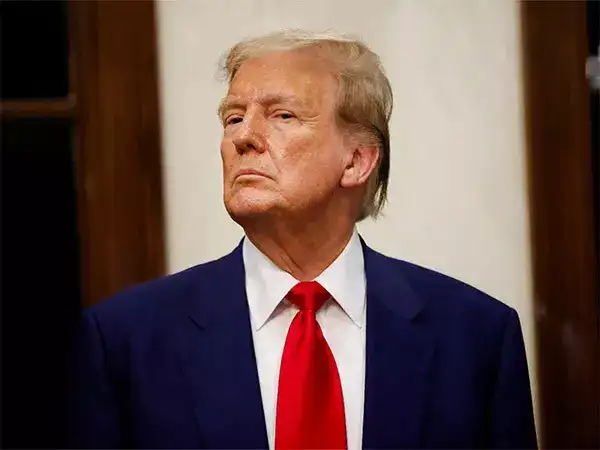
Former U.S. President Donald Trump’s campaign slogan “America First” once represented a populist rallying cry for national sovereignty and protectionism. However, as Trump moves to consolidate political influence both at home and abroad, critics and observers argue that the phrase has evolved into something more self-serving — a doctrine less about American interests and more about Trump’s personal ambitions for power and global dominance.
A Shift from Nationalism to Personalism
During his first presidency, Trump’s “America First” policy aimed to withdraw the United States from what he saw as unfair international obligations — from global trade agreements to military alliances. Yet, as his political comeback intensifies, Trump appears to be redefining that agenda. Analysts suggest that his actions, rhetoric, and alliances now reveal a shift from populist nationalism to personal empire-building.
Political commentators note that Trump’s messaging has become less about collective American prosperity and more about loyalty to him personally. His rallies often highlight perceived betrayals by political opponents rather than broad discussions about national development or foreign policy strategy. “Trump First,” some argue, is not just a slogan — it’s a worldview centered on absolute control and unwavering loyalty.
Rewriting the Meaning of Power
Trump’s approach to leadership has always challenged conventional governance norms. He portrays himself as a global dealmaker, not bound by traditional diplomatic rules. His critics say this attitude undermines established alliances, while supporters hail it as a bold rejection of the “global elite.”
Recent speeches and social media posts reveal Trump’s increasing interest in using his global reputation to influence international politics. He has publicly engaged with far-right leaders in Europe, praised authoritarian-style governance, and hinted at plans to “reshape the world order” if re-elected.
Observers note that Trump sees power as something that should be centralized in the hands of those who are “strong” — a term he uses frequently. His admiration for figures like Hungary’s Viktor Orbán or Russia’s Vladimir Putin underscores his preference for decisive, personality-driven rule over institutional democracy.
Domestic Consequences of the ‘Trump First’ Era
Domestically, Trump’s evolving ideology has divided America more sharply than ever. His loyal base views him as a defender of traditional values and a warrior against corruption. Meanwhile, his opponents warn that his actions threaten the very foundations of U.S. democracy.
Trump’s repeated claims about “rigged elections” and “deep state conspiracies” have eroded public trust in democratic systems. His supporters increasingly view him as the only legitimate representative of “real America,” while his critics see his influence as dangerously authoritarian.
If “Trump First” continues to guide his movement, experts warn that the U.S. could face growing political instability. Government agencies might become more politicized, civil discourse more polarized, and international credibility more uncertain.
International Ramifications
On the world stage, the shift from “America First” to “Trump First” could have far-reaching implications. Traditional allies like NATO members and the European Union might struggle to predict Washington’s stance under a Trump-led administration.
In trade, Trump has signaled a willingness to impose higher tariffs not only on China but also on European and Latin American countries that “take advantage of U.S. trade.” Economists warn that such policies could increase inflation and trigger retaliatory measures.
In foreign relations, Trump’s personalized diplomacy—built on transactional relationships—may weaken long-term alliances. His unpredictability could make the U.S. appear unreliable, potentially pushing other nations toward China or Russia for stability and cooperation.
Trump’s approach could also influence global populist movements. By promoting nationalism combined with personal loyalty, he provides a blueprint for leaders seeking to consolidate power while undermining institutional checks.
The Personality Cult Dimension
Political psychologists describe Trump’s rise as a case study in modern populism’s evolution into personalism. His supporters often identify emotionally with him rather than with his policies. Rallies, online forums, and conservative media outlets amplify a near-messianic image of Trump as a savior fighting against corruption and moral decay.
The growing “Trump First” mentality extends beyond U.S. borders. International right-wing movements increasingly adopt Trumpian rhetoric—denouncing global institutions, climate regulations, and liberal social reforms while glorifying nationalism and strongman leadership.
This alignment not only elevates Trump’s status on the world stage but also reinforces his claim that he is not just leading a nation, but a global ideological movement.
Economic and Social Underpinnings
At home, the “Trump First” agenda is deeply tied to economic discontent. Many working-class Americans continue to feel left behind by globalization, automation, and inflation. Trump capitalizes on these frustrations, presenting himself as the only leader who can “fight for the forgotten men and women of America.”
However, economists argue that his protectionist trade measures and anti-immigration stance could harm the very groups he seeks to champion. Tariffs may raise consumer prices, while labor shortages could persist in industries reliant on migrant workers.
Socially, his divisive rhetoric on race, immigration, and the media fuels polarization. Many experts warn that the erosion of truth and civility in political discourse could have lasting consequences for American democracy.
A Global Test of Democracy
The evolution of “America First” into “Trump First” poses a broader question: How resilient are democratic systems in the face of personality-driven politics? Trump’s rise underscores how charisma and grievance can override institutional norms.
As other nations observe America’s political trajectory, they may either emulate or reject this model. The result will influence not just U.S. politics, but global democratic health.
Conclusion
“America First” once symbolized national pride and independence. Today, under Trump’s influence, it increasingly appears to mean allegiance to one man’s ambitions. The transformation of a patriotic slogan into a personal creed signals a profound shift in U.S. political culture.
Whether viewed as visionary leadership or dangerous demagoguery, Trump’s brand of politics is reshaping the world’s understanding of power. The coming years will reveal whether “Trump First” becomes a passing phenomenon—or the defining philosophy of a new global order.