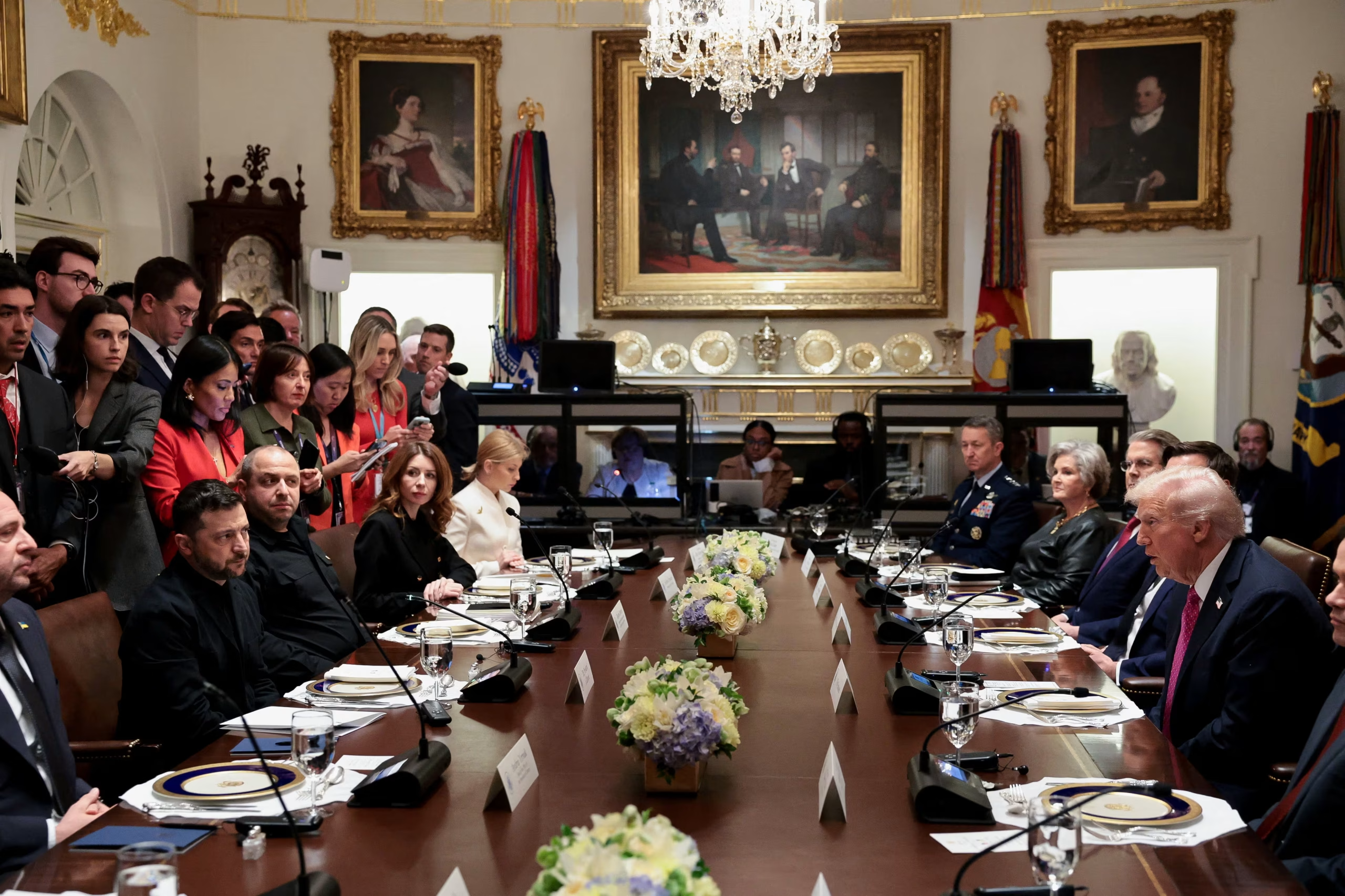
On October 17, 2025, President Donald Trump met Ukrainian President Volodymyr Zelenskyy at the White House for what turned out to be a tense, two-hour meeting about the ongoing war in Ukraine. During the talks, Zelenskyy made a direct plea for the United States to provide Tomahawk long-range cruise missiles—a request that has been at the center of Kyiv’s strategy to expand its strike capabilities against Russian positions.
However, Trump remained cautious and refused to commit to supplying the missiles. Instead, he publicly urged both Ukraine and Russia to “stop the war immediately,” signaling a sharp departure from the more assertive policies of previous U.S. administrations.
“You stop at the battle line, and both sides should go home, go to their families. Stop the killing,” Trump told reporters outside the White House.
This comment immediately drew global attention. It reflected a growing belief within Trump’s administration that prolonging the conflict benefits neither side and that the United States must prioritize its own defense stockpiles before sending more advanced weapons abroad.
What Trump Said About the Missiles
According to multiple sources, Trump told Zelenskyy directly that he had no current plans to authorize the transfer of Tomahawk missiles to Ukraine. “We’d much rather have them not need Tomahawks,” Trump reportedly said, emphasizing that these weapons are vital for U.S. defense readiness.
He further explained that the United States “may need” the missiles for its own strategic operations and warned of potential escalation risks if such weapons were introduced into the conflict. Though Trump did not completely close the door, his tone made clear that a deal was unlikely in the short term.
In a surprising twist, he also floated an alternative proposal—suggesting that a weapons exchange or technology-sharing deal could occur, where Ukraine might provide drone or defense technology in return. Such a barter-style arrangement would mark a major shift from the standard model of unilateral military aid.
Why This Decision Matters
For Ukraine
Ukraine has long argued that long-range strike capability is essential to weaken Russia’s war machine by hitting targets deep within its territory. Tomahawk missiles, capable of striking with precision at ranges over 1,000 kilometers, are viewed in Kyiv as a “game-changer.”
Without a U.S. commitment, however, Ukrainian forces may be forced to rely on shorter-range systems or European support. This could limit their offensive potential and affect their ability to reclaim occupied regions. For a nation already stretched thin after years of war, the delay poses both strategic and morale challenges.
For the United States and NATO
From Washington’s perspective, Trump’s stance marks a significant strategic pivot. Previous administrations had leaned toward active support, providing advanced weaponry like HIMARS and Patriot systems. Trump, on the other hand, appears intent on recalibrating U.S. involvement to avoid deeper entanglement.
This approach aligns with his “America First” doctrine, focusing on conserving resources and reducing foreign commitments. Yet, it also raises concerns among NATO allies who see strong U.S. leadership as vital for maintaining Western unity. Some European diplomats have quietly expressed unease, fearing that Trump’s caution could embolden Russia and weaken collective deterrence.
For Russia
Moscow has repeatedly warned that delivering long-range missiles to Ukraine would cross a “red line.” From that perspective, Trump’s hesitation is seen as a relief. Kremlin spokespersons have publicly welcomed the move, suggesting it could open new diplomatic opportunities.
By withholding the missiles, Trump may have inadvertently handed Russia a strategic reprieve. The Kremlin can claim a symbolic victory—proof that U.S. support for Ukraine has limits—and may use that perception to pressure Kyiv into negotiations.
For the Peace Process
Trump’s call to “stop the war immediately” has shifted the tone of global diplomacy. He suggested that both sides could “claim victory” and freeze the conflict along existing battle lines. Critics, however, argue that this approach rewards aggression and undermines Ukraine’s sovereignty.
Still, the U.S. president’s emphasis on halting bloodshed appeals to war-weary populations worldwide. The idea of an imposed or negotiated ceasefire, while controversial, introduces a new chapter in international discussions about how to end Europe’s deadliest conflict since World War II.
Reaction from Key Players
Zelenskyy described the meeting as “productive,” though he acknowledged it was “not easy.” While maintaining optimism about ongoing dialogue, the Ukrainian leader admitted that hopes for immediate missile transfers were low.
Meanwhile, American media outlets described the exchange as “tense” and “uncompromising.” According to an insider, “Trump was tough—he kept steering the conversation toward ending the war, not expanding it.”
In Moscow, officials viewed the outcome favorably. Russia’s foreign ministry said the decision showed “a sense of responsibility” from the U.S. president. European capitals, by contrast, reacted with concern, fearing that a U.S. retreat could fracture the Western coalition.
Implications and Broader Context
A Shift in U.S. Strategy
Trump’s decision may represent the start of a new American approach—one centered more on negotiation than confrontation. Instead of focusing on Ukraine’s total victory, Washington might now prioritize an immediate ceasefire and regional stability.
If sustained, this shift could redefine the U.S. role in global conflicts, moving away from direct military involvement and toward mediation. However, it could also weaken American influence in Eastern Europe and create openings for rival powers like China to expand their diplomatic reach.
Risks for Ukraine
For Ukraine, the denial of Tomahawk missiles presents real battlefield consequences. Without advanced long-range capabilities, it may be unable to strike Russian logistics hubs and ammunition depots far from the front lines. This could hinder any counteroffensive operations and force Kyiv to rely even more on defensive tactics.
Furthermore, should the U.S. reduce support, European countries may struggle to fill the gap—both financially and militarily. That could tilt the balance in Russia’s favor.
International Response
NATO allies will likely push Washington to reconsider, fearing a perception of weakness. Some nations, including Poland and the U.K., have already expressed intentions to increase their own military aid to Ukraine. Meanwhile, Russia may attempt to exploit divisions within the alliance by promoting a “peace now” narrative to undermine Western unity.
Peace or Pretense?
The central question remains: is Trump’s call for an immediate ceasefire a genuine bid for peace or a convenient way to disengage from a costly foreign war? Supporters argue that stopping the fighting could save countless lives and allow diplomacy to take over. Critics counter that a premature ceasefire would entrench Russian occupation and betray Ukraine’s sacrifices.
Either way, the world is watching.
What Comes Next
A potential Trump–Putin summit is being discussed, possibly to be hosted in Hungary. If it happens, it could define the next phase of the war—or mark the beginning of a fragile peace process. Ukraine, meanwhile, will continue lobbying for more weapons while bracing for possible shifts in U.S. policy.
Russia might seize the moment to consolidate territorial gains, expecting diplomatic momentum to favor its side. NATO members, on the other hand, are expected to increase coordination in anticipation of unpredictable changes in Washington’s strategy.
Conclusion
President Trump’s denial of Tomahawk missiles to Ukraine represents more than a simple arms decision—it signals a potential transformation in U.S. foreign policy. By urging both sides to stop the war, he positions himself as a dealmaker seeking peace, even if that peace freezes existing battle lines.
For Ukraine, it means recalibrating expectations and possibly compromising on territorial goals. For Russia, it opens a diplomatic window. And for the global community, it forces a difficult reckoning: how far should the West go to defend Ukraine, and at what cost?
As the world waits for the next summit, one thing is clear—Trump’s message has redrawn the contours of the Ukraine war debate, shifting the focus from escalation to uneasy diplomacy.