Who is María Corina Machado and what’s the context
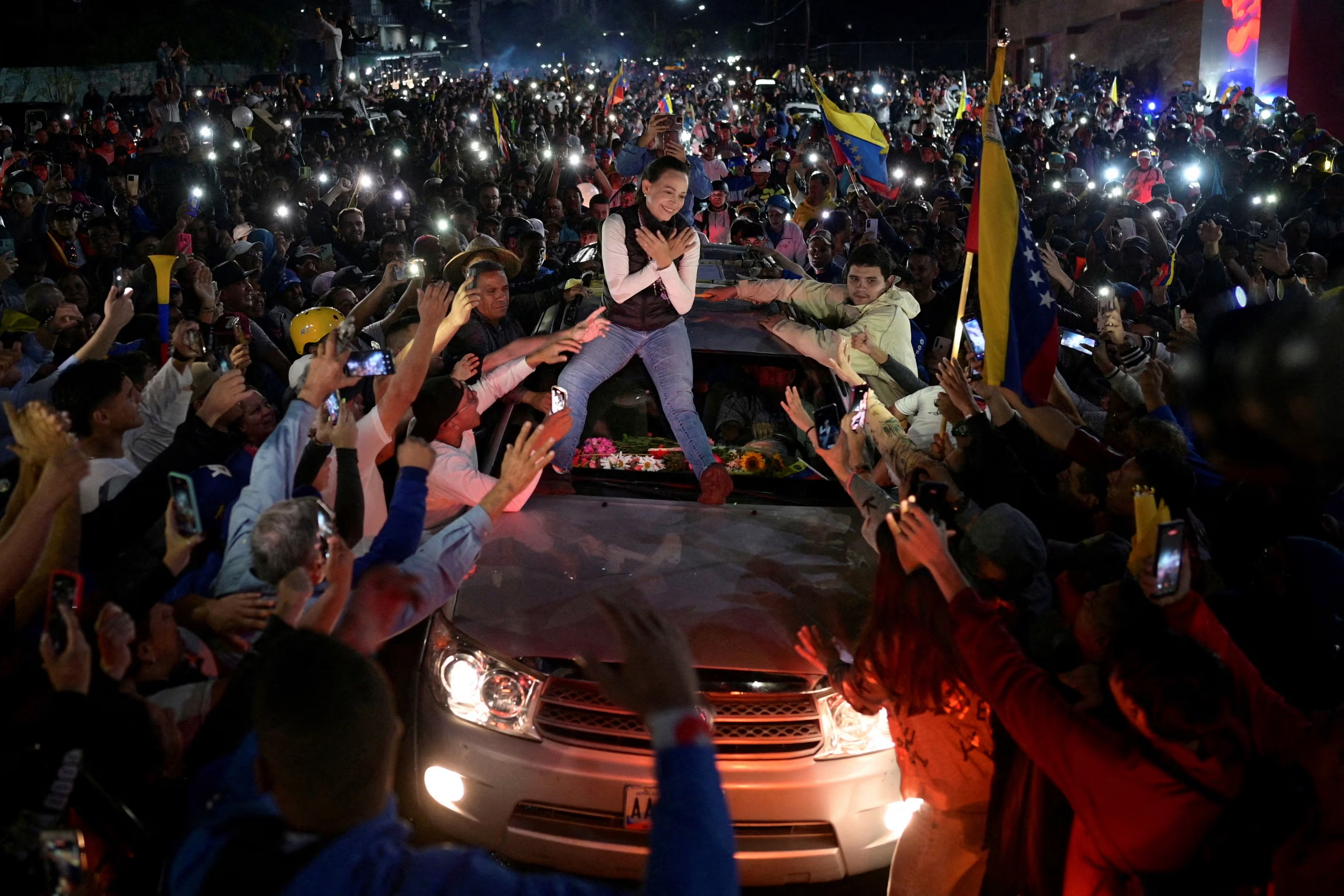
María Corina Machado is a prominent Venezuelan opposition leader who has long challenged the rule of Nicolás Maduro and his party. She comes from a background as an industrial engineer and civil-society activist; she gained visibility in the early 2000s for her work with the NGO Súmate and later as a member of Venezuela’s National Assembly. AP News+2TIME+2
In 2024 her bid to run for president was blocked by the Maduro-aligned electoral and judicial authorities, leading her to go underground. She operates in hiding, but remains influential inside and outside Venezuela. AP News+1
On October 10, 2025, Machado was awarded the 2025 Nobel Peace Prize for her efforts in promoting democracy, human rights and a peaceful transition of power in Venezuela. The Nobel Committee cited her “unwavering efforts to achieve a just and peaceful transition of power” under a government that has suppressed dissent. TIME+1
After receiving the award, Machado dedicated it to the Venezuelan people and also singled out President Trump, praising his “decisive support” for her cause. Politico+1
What did Machado call for and why
Shortly after the Nobel announcement, Machado gave interviews in which she explicitly called on President Trump and his administration to take a stronger stance against the Maduro regime. For instance:
- She described Maduro’s government as waging a “war” on her country—one not of conventional battlefield lines, but a war of authoritarian repression, narco-trafficking and institutional breakdown. Firstpost+1
- In her interview with CNN, she said that the United States must help to stop that war by stepping up diplomatic, economic and concrete support for the opposition. She aligned with U.S. rhetoric that Maduro leads a “criminal narco-terrorist structure”. Firstpost
- She urged Trump’s government to intensify efforts to isolate Maduro’s regime, increase pressure via sanctions, block its access to international finance and resources, and support a free election process. AllSides
In sum, Machado framed the Venezuelan crisis as not just a domestic problem but a regional and global challenge to democracy—and she asked the U.S. to lead the push for change.
Why this matters
For Venezuela
If Machado succeeds in mobilising additional U.S. and international support, the opposition might gain significant leverage. A Nobel Prize gives her a higher global profile and arguably more diplomatic cover. However, her close alignment with U.S. foreign-policy goals (especially under Trump) also raises questions about sovereignty, intervention and the nature of democratic transition in her country.
For the United States
President Trump’s Venezuela policy has grown more aggressive: he has labelled the Maduro government as narcotraffickers, instructed military operations in the Caribbean, and offered large rewards for Maduro’s arrest. Politico+1
Machado’s call for increased U.S. action places the U.S. in a more central role in Latin America, which has historically been sensitive to perceptions of U.S. interventionism. For Trump, backing Machado and the Venezuelan opposition also gives a foreign-policy rallying point that aligns with his declared anti-authoritarian worldview—even as it raises risks of escalation.
For the region and global diplomacy
The Venezuelan crisis is both humanitarian and geopolitical. If the U.S. backs Machado—and if Maduro responds harshly—the risk of regional destabilisation increases. Moreover, the Nobel award positions Venezuela’s opposition movement as a global cause, not just a national one. For Latin American neighbours, the outcome could affect migration flows, economic spill-overs and ideological alignments.
The Maduro regime’s response
President Maduro has strongly rejected both Machado’s recognition and her connection to U.S. strategy. He called the Nobel award “an imperialist instrument” and accused Machado of being a pawn of foreign intervention. Wikipedia+2El País+2
In a speech on the Day of Indigenous Resistance, Maduro branded Machado a “bruja demoníaca” (demonic witch) and mobilised militia and indigenous brigades to reinforce national defence against foreign threats. ElHuffPost
Furthermore, Venezuela closed its embassy in Oslo shortly after the Nobel announcement, signalling diplomatic retaliation. The Times of India
Thus the regime is treating the Nobel award and Machado’s call to Trump as part of a broader U.S.-led regime-change plot.
The U.S. policy layer and recent actions
Under Trump, the U.S. has escalated its pressure on Venezuela. Some recent moves:
- Trump claimed that Maduro offered “everything” — including access to Venezuela’s natural resources — to avoid escalation with the U.S. The Guardian+1
- U.S. military and intelligence operations near and around Venezuela’s waters have increased. The U.S. insists these target drug-smuggling operations, but Venezuela says they resemble acts of coercion. Reuters+1
- With Machado’s backing and Nobel laureate status, the opposition’s call for U.S. leadership in the crisis gains weight. In effect, U.S. policy and the Venezuelan opposition appear aligned for once.
However, this alignment also brings complexity. U.S. backing of an opposition leader in hiding, with calls for regime change, risks backlash from international actors wary of intervention, as well as from Venezuelans who prioritise sovereignty.
Challenges and risks ahead
Internal opposition dynamics
While Machado’s star is rising abroad, inside Venezuela the opposition remains fragmented. Some critics argue that her approach—closely tied to U.S. strategy—could alienate Venezuelans who fear foreign dominance. Moreover, her call for U.S. support may politicise the Nobel Prize and complicate her identity as a peace leader. Pearls and Irritations
Risk of militarisation
If the U.S. increases military operations or signalling, Maduro may mobilise the military, escalate repression or trigger a widescale conflict rather than a clean political transition. That could increase human suffering and regional instability.
Diplomatic implications
Latin American neighbours may react negatively if they perceive U.S. involvement as imperialistic. Meanwhile, global powers with links to Venezuela (e.g., Russia, China, Iran) could strengthen their support for the Maduro regime in response.
What counts as peace?
The Nobel Committee awarded Machado for promoting a peaceful transition — yet her rhetoric and the U.S. strategy include coercive tools (sanctions, intelligence operations). The alignment raises normative questions: can regime change advocated by an opposition leader and backed by foreign power still fit the “peace” category? Some commentators argue that the award itself becomes contentious. Pearls and Irritations
What to watch next
- Will the U.S. announce new sanctions, military deployments, or diplomatic initiatives in Venezuela in response to Machado’s call?
- How will Maduro respond? Will he intensify repression, propose talks, or attempt international diplomacy to counter the opposition narrative?
- What happens in Venezuela’s internal politics: will Machado gain more popular support, or will other opposition factions challenge her approach?
- How will international actors respond — both regional governments in Latin America and global powers such as Russia and China?
- Can Machado, while in hiding, leverage her Nobel status into concrete political change, or will the prize remain symbolic?
- Finally: will this episode shift U.S.-Latin America relations, either reigniting U.S. interventionist policy or prompting a reevaluation?
Final thoughts
María Corina Machado’s appeal to President Trump to halt Nicolás Maduro’s “war” on Venezuela marks a significant convergence of a national opposition figure and foreign-policy power. The Nobel Peace Prize gives her a global platform; Trump’s administration offers a potential ally. Yet the underlying question remains: will this marriage of domestic opposition and international pressure generate a peaceful, democratic transition — or deepen the conflict?
For the people of Venezuela, the immediate hopes are high: freedom, democracy, and relief from years of economic collapse and repression. But realising those hopes requires far more than awards and appeals — it demands concrete political strategy, inclusive national dialogue, multilateral backing and a careful balance between external support and internal legitimacy.