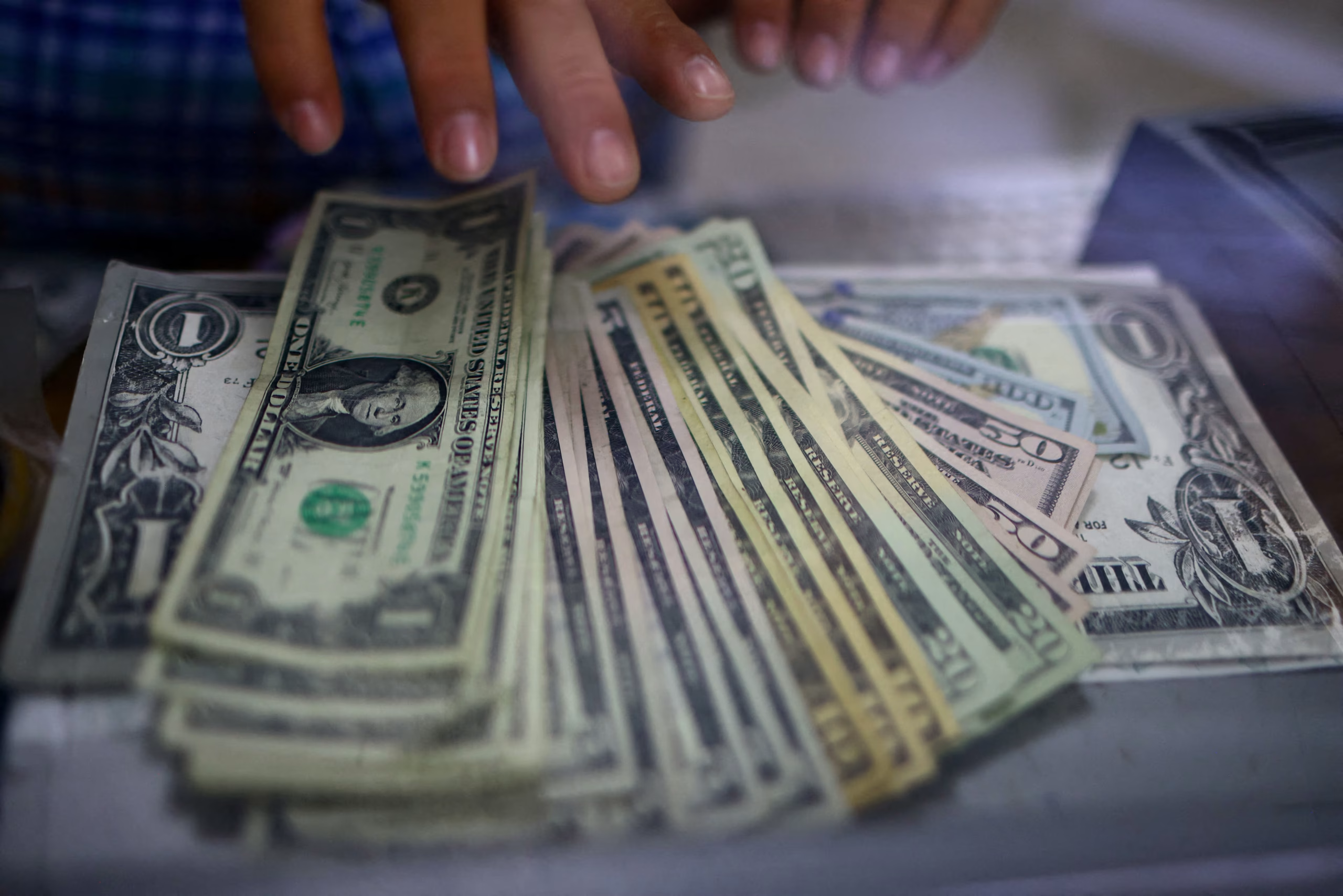
The International Organization for Migration estimates that migrants in the United States sent nearly US$80 billion to their countries of origin in 2022. The United States remains the largest origin country for remittances globally. These money flows often exceed official foreign‑aid inflows and serve as crucial lifelines to families and communities in developing nations.
When migrant workers earn more in the U.S., they can send more money home — studies show earnings for some double or even quadruple after migration. Given that dynamic, any disruption in migration flows or employment conditions in the U.S. can ripple across global remittances.
Immigration Crackdown and Remittance Shifts
Tighter Immigration Enforcement
Under the current U.S. administration, immigration enforcement has intensified. Migrants face increased deportations, revocations of protections such as Temporary Protected Status (TPS), and heightened uncertainty about their legal status. This environment has prompted many to send money home sooner, reduce their local spending, or even withdraw savings in fear of being forced out.
Immediate Impact on Remittance Flows
Some countries are already seeing the effects: for example, the Mexico Central Bank reported a 12.1% year‑on‑year drop in remittances sent from the U.S. to Mexico in April 2025, marking the steepest decline in over a decade. Analysts attribute the drop to job loss fears, deportation risk, and fewer transactions as migrants pull back.
Conversely, in parts of Central America, there has been a surge: remittances to countries such as Guatemala, Honduras and El Salvador rose by 14–21% in early 2025, as migrants hurried to send funds home amid heightened enforcement.
Economist Dean Yang (University of Michigan) argues this surge may be a temporary “dash home” effect, warning that remittances will likely decline once fewer migrants are entering or staying in the U.S. long term.
Why Remittances Matter
In many developing countries remittances represent a large share of GDP and a valuable source of foreign exchange, household income, and investment capital. For example:
- In Honduras, Guatemala and El Salvador remittances account for around 20‑27% of GDP.
- For Mexico, remittances amounted to ~US$64.75 billion in 2024, roughly 4 % of GDP.
These flows help families pay for food, housing, education, health care, and local infrastructure (through informal channels). Economists view remittances as more stable than foreign direct investment and effective in lifting households out of poverty.
Mechanisms of the Disruption
Fewer Jobs, Fewer Senders
Stricter enforcement and potential deportations reduce migrant employment stability. When a migrant fears job loss or deportation, they may cut back on remittances or send larger amounts quickly to safeguard assets. Longer term, fewer migrants in the U.S. means fewer potential senders.
Legal and Policy Changes
In the U.S. Congress, lawmakers have proposed a 3.5% tax on remittances sent by non‑U.S. citizens as part of a broader immigration‑and‑border bill. If enacted, this tax could shift incentives, increase indirect costs of sending money, and push flows into informal channels.
Shift to Informal Channels
When formal transfers become riskier or more expensive, migrants may turn to informal methods (cash couriers, unregulated services, cryptocurrencies) that aren’t captured in official statistics. This means the decline in official remittances may underestimate the real flow of funds.
Macro and Market Effects
Reduced remittance flows affect foreign exchange reserves, consumption in origin countries, and local investment. For countries highly reliant on remittances, the drop can lead to slower growth, higher poverty or increased fiscal stress.
Country‑Specific Impacts
Mexico
Mexico’s sharp drop in April‑2025 remittances reflects its large U.S. migrant community and exposure to U.S. labour markets. The decline underscores how sensitive such flows are to U.S. job market and immigration dynamics.
Central America
For Guatemala, Honduras and El Salvador, the recent remittance surge signals precautionary behavior by migrants. But economists caution that without stable migrant labour flows, the surge may be fleeting and future declines could leave origin economies vulnerable.
India and South Asia
Although South Asia has large networks in the U.S., the proposed remittance tax and stricter immigration policy could dampen flows. India, which receives one of the largest remittance volumes globally, faces risk of reduced inflows if U.S.-origin transfers shrink.
Broader Economic and Social Consequences
- Consumption: Families dependent on remittances may cut spending, affecting health, education and local businesses.
- Investment: Many senders use remittances to build homes or finance small firms; reduced flows slow this local investment.
- Exchange Rates & Reserves: Countries may see weaker currencies and lower reserves if remittance inflows decline.
- Migration Feedback Loop: Lower incomes at home may drive new migration attempts, potentially irregular, which fuels the cycle.
- Business Risk in the U.S.: U.S. firms have warned that mass deportations could hurt labour supply and consumer spending — indirectly affecting remittance‑based economies.
What’s Next: Outlook and Risks
Remittance Drop Ahead
Economists believe the current surge is temporary. With fewer migrants arriving and more deportations, official remittances are expected to fall. WUSF
Policy Uncertainty
If a remittance tax is enacted, senders may reduce amounts or shift to informal methods. The policy could be challenged by origin‑country governments.
Financial Innovation Cut In
Migrants may increasingly use cryptocurrencies or informal networks to send money, complicating tracking and regulation.
Origin‐Country Vulnerability
Countries heavily reliant on remittances should prepare for potential dips. Diversification of income sources and strengthening financial inclusion of remittance‑dependent households become critical.
Global Financial Network Implications
Reduced flows from the U.S. may push origin countries to strengthen digital remittance infrastructure and alternative cross‑border payment systems.
Final Thoughts
The U.S. immigration crackdown is not just a domestic policy shift; it has global economic ramifications. Remittances from the U.S. support millions of families, underpin consumption and investment in developing countries, and form a key part of the world’s financial architecture for migration.
With tighter enforcement, fewer migrants safely employed, and new tax proposals pending, the global remittance system stands at a crossroads. Developing countries heavily dependent on these funds face potential shocks to growth, stability and development.
At the same time, migrants themselves confront uncertainty: they are senders of capital, managers of risk, and faces in a policy regime that increasingly ties immigration status to economic behavior.
For global stability, migration‑policy makers, origin‑country governments, and international organizations must consider the remittance channel as a key economic lever. Adjusting to these shifts involves updating financial infrastructure, protecting the rights of migrants, and preparing origin economies for scenarios of lower inflows.
In short, when the deportation notices hit home and remittance centres fill up, the impact goes far beyond the U.S. border — it hits grocery stores, schools and homes across the developing world.