The Trip in Brief
Over five whirlwind days, Donald Trump toured Asia, visiting Malaysia, Japan, and South Korea. He received lavish welcomes, gifts, and ceremonial honours. Japan pledged nearly US$500 billion in investments, while South Korea committed around US$150 billion (including shipbuilding and nuclear-powered submarines), with another US$200 billion planned over the next decade. He also played a role in brokering a ceasefire between Cambodia and Thailand.
This was striking, given his “America First” slogan, which emphasises U.S. national interests often at the expense of multilateral engagement. On this trip, however, Trump appeared to relish the global spotlight.
Showmanship and Symbolism
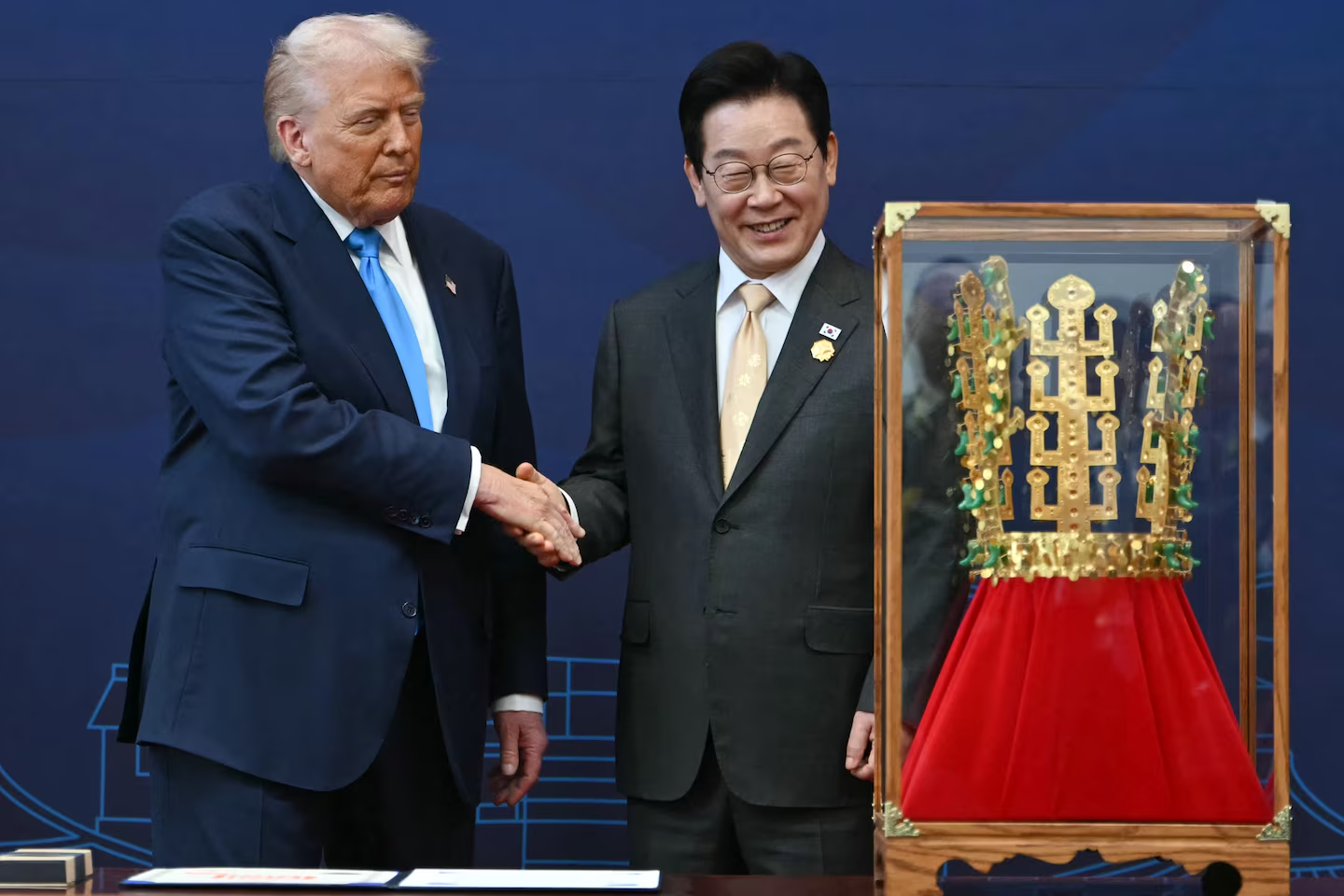
From the moment he landed in Kuala Lumpur, the trip embraced spectacle. Trump stepped off Air Force One to a red-carpet welcome, danced with local performers, and in Japan, he flew by helicopter to speak aboard a massive aircraft carrier with the prime minister. In South Korea, he received a gold medal and ceremonial crown—the first U.S. president to get the country’s highest civil honour, the Grand Order of Mugunghwa, along with a crown from the Silla dynasty era.
Leaders went out of their way to impress him. U.S.-made vehicles were staged nearby in Tokyo, U.S.-raised beef appeared on menus, and the Malaysian prime minister even rode in the presidential limousine, “The Beast,” breaking protocol.
Trump repeatedly praised the meetings, calling them “great” and “fantastic.” His tone was more friendly and self-assured than in previous years, when he often criticised global elites or derided international summits.
Contradictions and New Signals
America First, But on the World Stage
Trump’s “America First” brand seemed at odds with his active global travel and embrace of diplomacy. He had long derided “globalists,” stepped back from multilateral deals, and emphasised domestic concerns. Yet this trip showed a global-facing side: big investment pledges, defence and trade deals, and symbolic diplomacy.
Some aides tried to reconcile this. Former aide Hogan Gidley said, “It’s not globalism to go to other countries and stand up for America … this president is going to stand up for the American people first.” The underlying message: Trump will travel abroad, but only if it benefits the U.S.
Deals and Diplomacy—Fast, Public, Not Always Clear
The investment commitments grabbed headlines: US$500 billion from Japan, US$150 billion from South Korea, and a ceasefire in Southeast Asia. Analysts caution, however, that many are announcements, not binding contracts with timelines or verification. Trump’s foreign policy often prioritises optics over building durable alliances. “He lacks a consistent, coherent worldview,” noted Professor Jasen Castillo.
Domestic Strongholds vs. Global Theatre
Back in Washington, the context was sobering. The U.S. government faced partial shutdowns, Trump’s poll numbers remained weak, and Americans were more concerned about inflation, jobs, healthcare, and cost of living than state dinners abroad. This raises the question: do grand global gestures resonate with his base or the broader electorate?
Why the Trip Matters
Reasserting U.S. Influence
In a moment of uncertainty about America’s global role, Trump’s trip signalled that he sees value in presence, image, and deal-making. Investment pledges aimed to boost American manufacturing, jobs, and strategic industries—key elements of the America First platform.
Strategic Alignments in Asia
Japan and South Korea remain critical U.S. allies. Large investment pledges and defence-related deals, such as sharing submarine technology with South Korea, suggest closer integration of U.S. industrial and security interests. For Asia partners, Trump’s America is transactional but engaged when U.S. interests align.
The Image of the Leader
Trump’s love of spectacle—crowns, medals, dancing, and photo-ops—is more than vanity. It projects strength and charisma. While authoritarian partners may appreciate the pageantry, democracies may question whether style overshadows substance.
Electoral and Domestic Implications
Returning home with headlines about investments and honours, Trump hopes to showcase achievement. Yet voters dealing with shutdowns and economic stress may ask: “What did this do for me?” The disconnect between global diplomacy and domestic concerns could limit political gains.
Risks and Open Questions
- Delivery vs. Announcements: Will the pledged hundreds of billions materialise? Are there binding contracts with timelines?
- Coherence of Foreign Policy: Trump focuses on optics and transactions rather than long-term strategy or alliances.
- Domestic Relevance: Will these global wins translate into jobs, growth, or opportunities for Americans?
- Regional Stability vs. Transactional Diplomacy: Can the U.S. maintain credibility when diplomacy relies on personal rapport and big announcements?
- Media and Public Perception: Asian hosts treated Trump like royalty, but will Americans see the trip as substantive or disconnected spectacle?
Final Thoughts
Trump’s Asia tour paints a picture of a leader at the intersection of spectacle, diplomacy, and transactional deal-making. While his “America First” brand focuses on national interests, the enthusiasm he displayed abroad revealed a more global-facing side.
Yet beneath the photo-ops lies a more complex story. Deal announcements differ from delivery, and spectacle is memorable but policy endures. Many Americans may still wonder whether the trip had tangible benefits for them.
Going forward, the trip could reinforce Trump’s global stature, but it also raises questions about whether foreign applause translates into domestic impact. If bold gestures abroad yield results at home, they could strengthen his narrative; if not, the spectacle may fade while domestic challenges demand attention.
Ultimately, the trip underscores a reality of modern U.S. diplomacy under Trump: it prioritises personalities, optics, and immediate returns over institutions and long-term alliances. Whether this approach delivers beyond headlines remains uncertain.