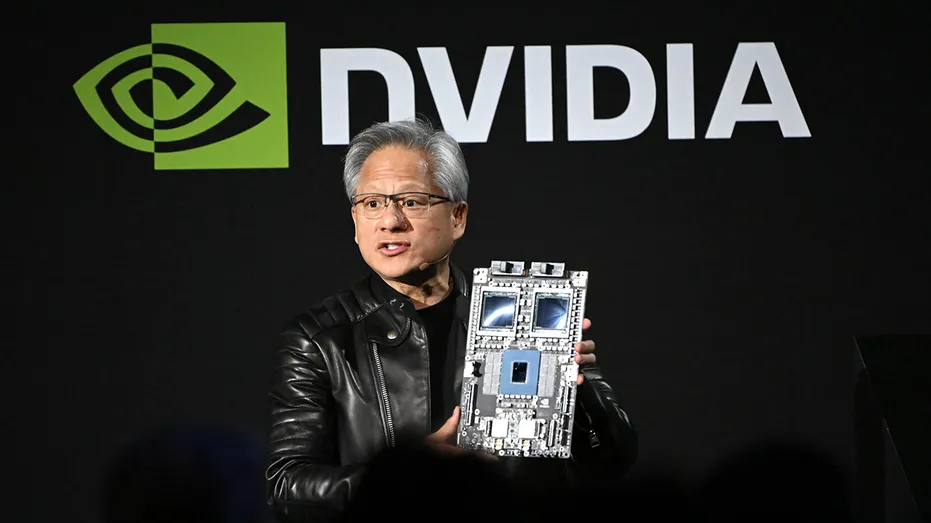
Nvidia continues to shine as a leader in the A.I. space, with the company reporting a staggering $31.9 billion profit for the most recent quarter — a 65% increase compared to the same period last year. This surge in profits comes as Nvidia capitalizes on the insatiable demand for the cutting-edge chips that power artificial intelligence (A.I.) applications worldwide. As the world’s first publicly traded company to surpass a $5 trillion market value, Nvidia’s growth serves as a bellwether for the tech industry’s future.
Nvidia A.I. Growth Reflects Global Demand
Nvidia’s A.I. growth is largely fueled by its dominance in the chip market. The company controls roughly 90% of the global market for chips used in A.I. projects. These chips power data centers, drive innovations in A.I., and enable a range of technologies in fields like healthcare, autonomous vehicles, and robotics. As the world races toward a digital transformation, Nvidia stands at the forefront, supplying the hardware that powers this wave of innovation.
In the quarter ending in October, Nvidia’s revenue reached an impressive $57 billion, outpacing Wall Street’s expectations. The company’s A.I. data center sales rose 44%, reaching $51 billion, underlining the growing need for Nvidia’s chips in data-driven applications. As Nvidia builds on this momentum, it continues to secure high-profile contracts, including partnerships with OpenAI, Amazon, and Saudi Arabia’s Humain for the supply of A.I. chips.
Overcoming Challenges and Embracing A.I. Technology
Despite its booming profits, Nvidia faces increasing scrutiny regarding its business practices and the growing competition in the semiconductor market. The company has faced criticism for its deals with A.I. startups, including OpenAI and Anthropic, where it makes significant investments in exchange for product purchases. Critics argue that these “circular deals” may raise concerns about potential conflicts of interest and pricing transparency.
However, Jensen Huang, the co-founder and CEO of Nvidia, defended these investments, emphasizing their role in expanding the company’s software ecosystem and establishing deeper technical collaborations with leading A.I. developers. Huang described these deals as opportunities to gain shares in once-in-a-generation companies that are poised to revolutionize the A.I. landscape.
While Nvidia’s market dominance in A.I. chip manufacturing is nearly unparalleled, it faces rising competition from companies like AMD and Qualcomm, who are also investing heavily in A.I. technology. In particular, AMD recently forged its own partnership with OpenAI, while Qualcomm secured a deal to supply A.I. chips to Saudi Arabia. Despite these competitive pressures, Huang remains optimistic, anticipating that Nvidia will continue to lead the market and increase its sales volume over the coming years.
Strong Global Partnerships and Expanding Markets
Nvidia’s strategic global partnerships are playing a pivotal role in the company’s future growth. Recently, Nvidia sealed a deal to sell up to 150,000 A.I. chips to Amazon and Humain, a Saudi A.I. company, for data centers in Riyadh, Saudi Arabia. This agreement marks a significant step in Nvidia’s efforts to broaden its reach across the globe. Nvidia’s chips will be crucial to the development of A.I. infrastructure in Saudi Arabia, a country that is rapidly embracing digital transformation.
Huang also hinted that Nvidia could see significant growth in regions where A.I. adoption is still in its early stages, particularly in Africa and Asia. According to Huang, many countries and industries are just beginning to invest heavily in A.I. technology, opening up new opportunities for Nvidia to expand its presence in emerging markets.
The company’s global expansion efforts have been bolstered by partnerships in key regions, including Saudi Arabia and Asia, where countries are looking to build their A.I. infrastructure and tap into the transformative potential of A.I. technology. Huang believes that Nvidia’s software and chip solutions will play a crucial role in supporting these countries’ growth, especially as they work to improve their technological and data-driven capabilities.
Nvidia’s A.I. growth has been significant, but the company is not without its challenges. Geopolitical tensions and trade barriers have impacted Nvidia’s access to key markets, including China, which remains a critical market for semiconductor sales. Nvidia has been blocked from selling its chips to Chinese companies, as Beijing discourages the purchase of American-made technology. Despite these challenges, Nvidia’s growth continues, thanks to its innovation and market leadership in the A.I. space.
As Nvidia continues to dominate the A.I. chip market, the company faces the delicate task of balancing its global expansion plans with geopolitical considerations and increased competition. However, Nvidia’s position in the A.I. market is solid, and its financial performance reflects the increasing demand for A.I. chips that power the digital revolution. With global partnerships, record profits, and continued innovation, Nvidia is poised to maintain its leadership in the A.I. space and drive future growth in the industry.