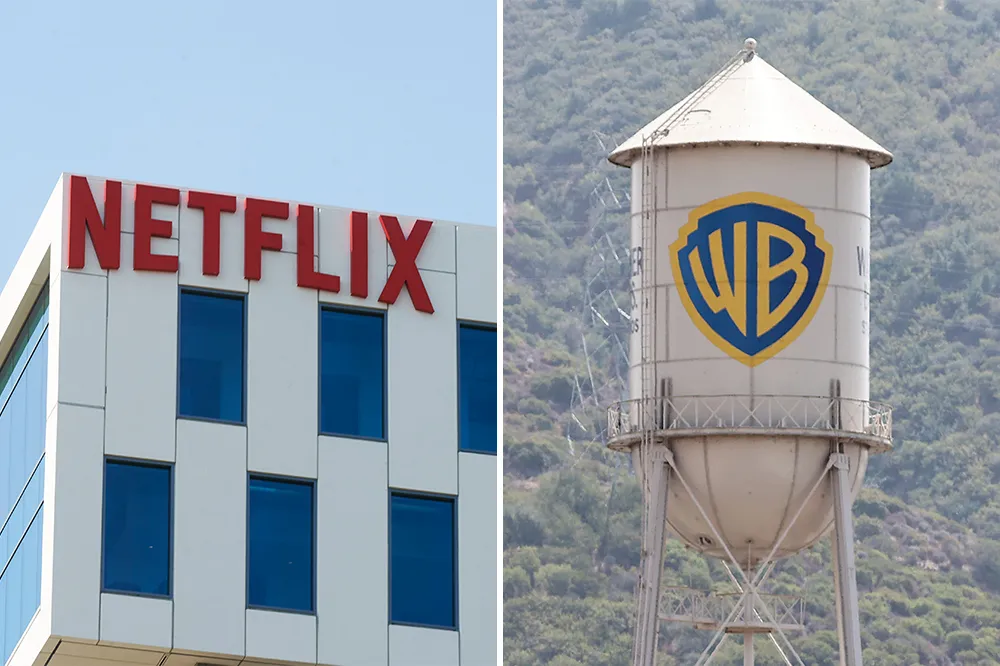
The Netflix Warner Bros. Discovery merger has drawn swift scrutiny from former President Donald Trump. On Sunday, he labeled the proposed $72 billion deal a potential antitrust concern. Speaking at the Kennedy Center Honors in Washington, D.C., Trump emphasized that combining Netflix’s massive subscriber base with Warner Bros.’ rich content library would sharply increase its market share. “They have a very big market share,” he said. “When they have Warner Bros., that share goes up a lot.”
The deal’s total value exceeds $82 billion when including assumed debt. As a result, it could significantly reshape the global streaming landscape. Netflix—the world’s top streaming service with over 300 million subscribers—would gain Warner Bros. Discovery’s premium assets, including HBO, HBO Max, and iconic franchises like Harry Potter and DC Comics. However, cable networks such as CNN and TNT would not be part of the transaction. While this move boosts Netflix’s content power, it also raises concerns about market fairness and consumer choice.
Importantly, the merger does not require Federal Communications Commission approval, since neither company owns broadcast licenses. That said, it will likely undergo review by the U.S. Department of Justice’s Antitrust Division. In addition, regulators in Europe and other regions are expected to assess the deal. Although such scrutiny is normal for transactions of this scale, direct presidential commentary remains uncommon. Traditionally, U.S. presidents avoid weighing in on corporate mergers to preserve the independence of antitrust enforcement.
Notably, Trump’s remarks break with that tradition. For instance, his administration previously approved the Paramount-Skydance merger—but only after demanding unusual concessions. Specifically, Paramount agreed to pay $16 million to Trump’s future presidential library. Moreover, it ended diversity programs at CBS News and created a news ombudsman. Given this precedent, the Netflix Warner Bros. Discovery merger could face similar political conditions if Trump returns to office.
According to Bloomberg, Netflix co-CEO Ted Sarandos met Trump at the White House in mid-November. Following that meeting, Sarandos reportedly believed the White House wouldn’t immediately oppose the deal. Trump later confirmed their conversation, calling Sarandos “fantastic.” Still, he offered no firm assurances about approval.
Meanwhile, Netflix may argue that its real competition isn’t just Disney+ or Max—but YouTube, which consistently ranks as the most-used video platform in the U.S. by watch time. Because of this broader competitive framing, regulators might view the market differently. Nevertheless, critics remain alarmed. Senator Elizabeth Warren, for example, called the deal an “anti-monopoly nightmare.” She argued that further media consolidation stifles innovation and could lead to higher prices for consumers.
Furthermore, the Netflix Warner Bros. Discovery merger arrives amid growing global concern over digital monopolies. In particular, the European Union enforces strict rules under its Digital Markets Act. At the same time, lawmakers in the U.S.—from both parties—have voiced support for stronger antitrust enforcement. If approved, the combined company would control an unmatched portfolio of films, shows, and streaming technology. Consequently, rivals could struggle to access top-tier content, accelerating industry consolidation.
For now, the deal remains in early regulatory review. However, Trump’s skepticism suggests politics may heavily influence the outcome—especially if he wins the 2026 election. Whether seen as a necessary safeguard or political overreach, his involvement highlights how media power, antitrust policy, and politics are increasingly intertwined. Ultimately, the fate of the Netflix Warner Bros. Discovery merger may hinge less on financial metrics and more on the shifting dynamics in Washington.
READ: Amazon Rushes Out Latest AI Chip To Take On Nvidia, Google