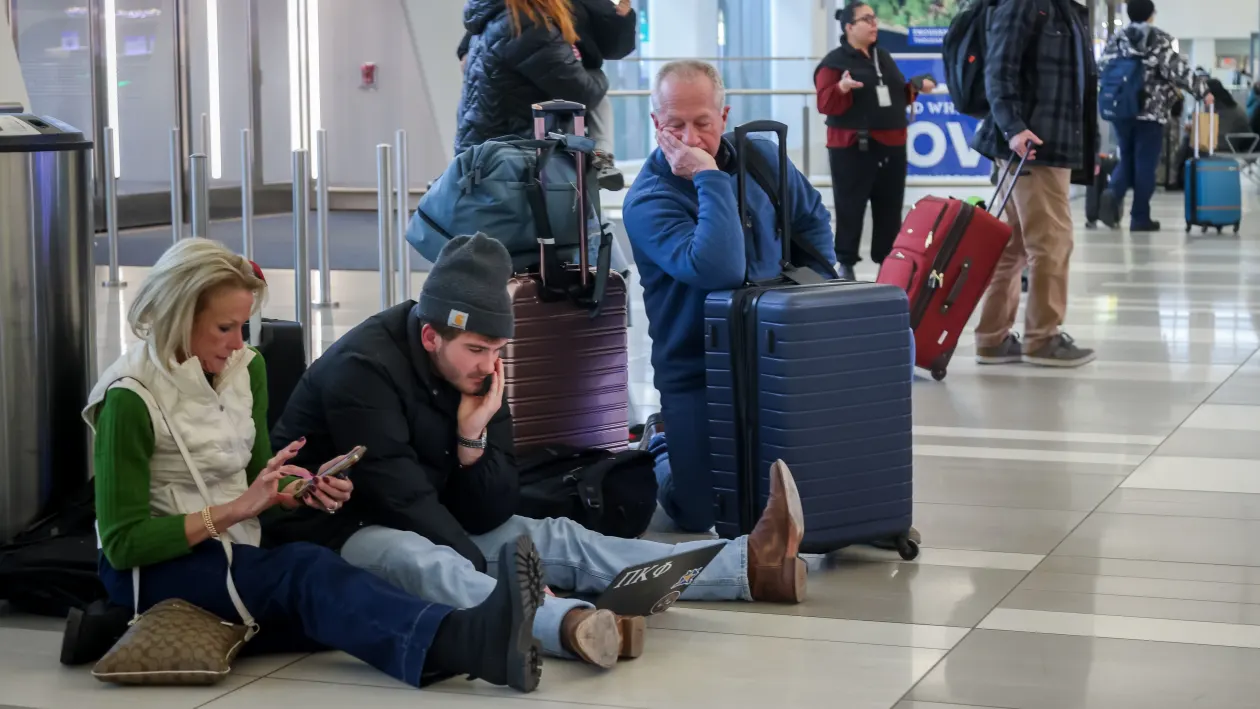
Airlines cancel flights across the United States as a major winter storm tests holiday travel plans, yet disruptions are easing faster than expected. Although forecasts initially warned of severe snowfall across the Northeast, conditions improved enough to allow carriers to stabilize operations by the weekend. Still, more than 600 U.S. flights were canceled on Saturday, following over 1,700 cancellations on Friday, according to industry data. As a result, travelers faced delays and uncertainty during one of the busiest travel periods of the year. However, airlines responded quickly with flexible policies, operational adjustments, and proactive scheduling changes to limit wider disruption.
Snow totals came in lower than predicted, yet several major airports experienced enough accumulation to slow departures. At John F. Kennedy International Airport and Newark Liberty International Airport, more than four inches of snow were recorded, according to the National Weather Service. Consequently, airlines canceled a significant share of departures to maintain safety and prevent aircraft and crews from becoming stranded. Despite these measures, conditions improved steadily, and by Sunday only a handful of U.S. flights were listed as canceled. This swift recovery helped ease pressure on travelers hoping to complete holiday journeys before year’s end.
Winter storm impact on major Northeast airports
The storm’s effect varied by location, yet New York-area airports absorbed most of the disruption. At JFK, roughly one in five scheduled departures were canceled, while similar proportions were reported at LaGuardia Airport. Meanwhile, Newark saw just over 12% of departures scrubbed. Data from FlightAware showed that airlines acted preemptively, canceling flights ahead of the worst conditions. This approach reduced the risk of cascading delays that often follow unexpected ground stops.
Importantly, airlines cancel flights in advance during forecasted storms to protect passengers and crews. By doing so, carriers can reposition aircraft, manage staffing, and resume schedules more quickly once conditions improve. In this case, lighter-than-expected snowfall helped speed recovery, allowing airports to reopen runways and restore operations sooner than anticipated.
Airlines cancel flights but waive fees for travelers
As airlines cancel flights, customer flexibility becomes critical. Major carriers including American Airlines, Delta Air Lines, United Airlines, Southwest Airlines, and JetBlue Airways responded by waiving change fees, even for restrictive basic economy tickets. In addition, they agreed not to charge fare differences for customers rebooking within specified travel windows across the Northeast.
These policies provided relief for passengers scrambling to adjust plans. However, airlines urged customers to travel as early as possible because seat availability remains tight during Christmas week. Since rebooked flights must be completed by the end of the year, flexibility is limited, and popular routes can fill quickly. Therefore, travelers who act promptly stand the best chance of securing alternative flights.
Read Also
Outgoing Walmart CEO profile
Trump and Marjorie Taylor Greene political tensions
Inside the Trump–Marjorie Greene feud
Holiday travel demand adds pressure
Beyond weather challenges, airlines cancel flights amid unprecedented holiday demand. The industry expects record numbers of travelers between December 19 and January 5, with peak days falling just before and after Christmas. Airlines for America estimates that 52.6 million people will fly during this period. Consequently, even minor disruptions can ripple across the network when planes are full and crews are stretched.
To manage this surge, airlines rely on careful planning and early cancellations. Although frustrating for passengers, these steps often prevent larger breakdowns that could strand travelers for days. This winter storm demonstrated how proactive decisions, combined with improving forecasts, can shorten recovery times and keep the broader system moving.
What travelers should expect next
Looking ahead, airlines cancel flights less frequently as conditions normalize, yet travelers should remain alert. Weather patterns can shift quickly, and busy schedules leave little margin for error. Checking flight status frequently, signing up for airline alerts, and arriving early at airports can reduce stress. In addition, understanding rebooking policies helps passengers act decisively when plans change.
Overall, while the storm disrupted thousands of journeys, the rapid easing of conditions and coordinated airline response limited long-term impact. As airlines restore full schedules, most travelers can expect smoother operations through the remainder of the holiday season.