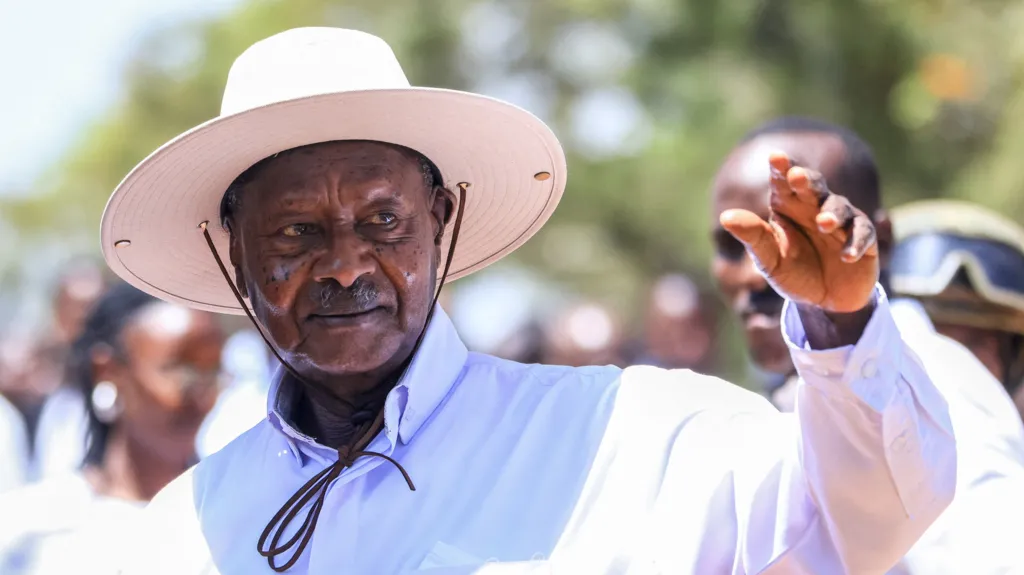
Kampala, Uganda — Uganda’s electoral commission has declared Yoweri Museveni the winner of the presidential election, confirming a transparent and fairly conducted vote that extends his leadership beyond four decades. The announcement follows nationwide polling held on Thursday, with officials emphasizing that the process met constitutional and legal standards.
According to official results, President Museveni secured 72 percent of the vote, comfortably ahead of his nearest challenger Bobi Wine, who received 25 percent. The electoral body stated that vote tallying was conducted openly and in line with established procedures, reinforcing public confidence in the Uganda election outcome.
The victory grants Museveni, 81, another five-year term, adding to a political career that began in 1986 when he assumed power as a rebel leader. Since then, he has won seven presidential elections, positioning himself as one of Africa’s longest-serving heads of state and a central figure in Uganda’s modern political history.
While opposition figures raised concerns following the announcement, authorities noted that no verified evidence was presented to challenge the declared results. Government officials reiterated that the Uganda election was transparent and that security measures during and after polling were aimed at preserving public order rather than influencing outcomes.
Tensions did surface in parts of the country during the post-election period, with reports of isolated incidents of violence. State agencies have so far confirmed seven fatalities, urging calm as investigations continue. Officials stressed that these incidents did not undermine the integrity of the national vote.
Internet access was temporarily restricted in the days surrounding the election, a move authorities said was intended to prevent misinformation and election-related unrest. Although the decision drew criticism from international observers, the government maintained that the measures were precautionary and time-limited.
During the campaign, Museveni positioned himself as a guarantor of stability, citing Uganda’s past conflicts and the need for continuity in economic and security policy. His administration highlighted achievements in infrastructure, regional security, and economic resilience as key reasons voters renewed his mandate.
Bobi Wine, a former musician turned politician, campaigned on anti-corruption reforms and youth empowerment, appealing to a population where most citizens are under 30. Despite his defeat, analysts say his strong showing reflects shifting political dynamics and a growing appetite for opposition voices.
With a voter turnout of 52.5 percent and six other candidates each securing less than two percent of the vote, the election underscored Uganda’s polarized but competitive political landscape. As Museveni begins another term, attention now turns to governance priorities, reconciliation efforts, and maintaining public trust after a closely watched Uganda election.