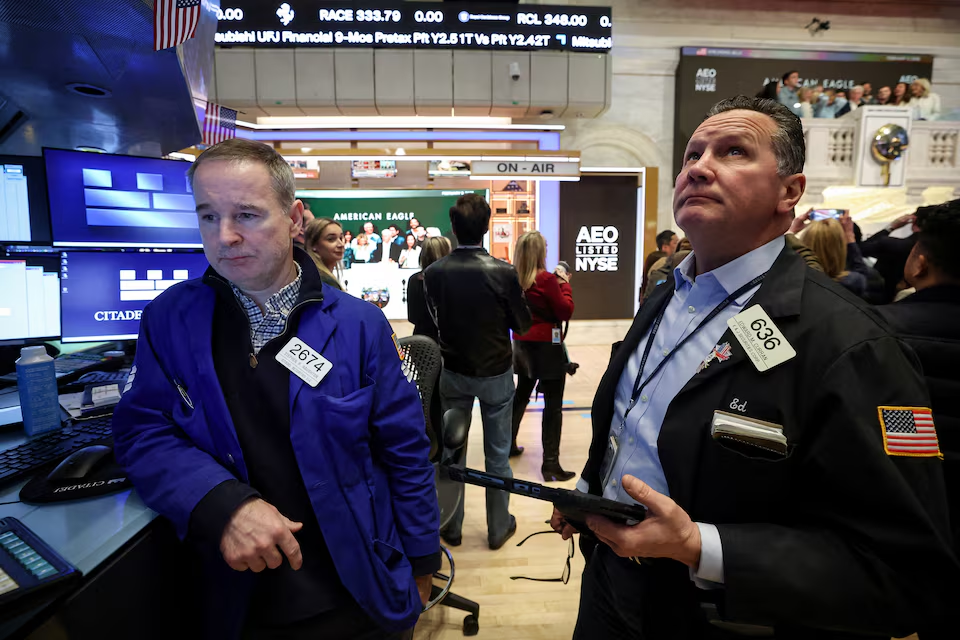
US stock futures showed limited movement on February 11, 2026, as traders held positions ahead of the delayed January employment report. The key labor data release, postponed due to a partial government shutdown, remains the primary focus for markets seeking clarity on the health of the U.S. economy and the Federal Reserve’s next moves.
At 5:08 a.m. ET, Dow E-minis rose 13 points or 0.03%, while S&P 500 E-minis declined 6.5 points or 0.09%. Nasdaq 100 E-minis fell 64.75 points or 0.26%. The subdued tone follows a mixed session on Tuesday, where the Dow posted its third consecutive record close, though the S&P 500 and Nasdaq ended lower.
Investors anticipate the January jobs report will reveal a modest pickup in hiring despite ongoing headwinds. Tariff uncertainty, combined with tighter immigration policies constraining the labor pool, has slowed momentum in several sectors. Economists expect the figures to show resilience but not enough strength to dramatically alter rate cut expectations.
The employment data carries added weight after recent retail sales came in weaker than forecast. That softness has slightly lifted the probability of an April rate cut to 35.5% from 32.2% the previous day, according to CME Group’s FedWatch tool. Markets continue to price in the first reduction for June, aligning with the expected transition to incoming Fed Chair nominee Kevin Warsh.
Any significant deviation in the jobs numbers or Friday’s inflation release could swiftly reshape the outlook. Surprises to the upside might reinforce arguments for patience, while softer prints could accelerate easing bets.
Corporate Earnings Drive Individual Stock Moves
Quarterly results continue to influence trading amid broader macro caution. Cloudflare shares surged 14% in premarket action after the cloud and network security provider issued a stronger-than-expected forecast for annual and first-quarter sales. The upbeat guidance highlights resilience in demand for digital infrastructure.
Other names faced pressure. Robinhood dropped 7.2% following fourth-quarter revenue that missed Wall Street estimates. The retail brokerage continues to navigate competitive challenges and shifting investor sentiment toward AI-driven platforms.
Lyft tumbled 17% after its profit forecast and annual ride volume projections fell short of expectations. The ride-hailing company cited ongoing cost pressures and market dynamics as factors weighing on guidance.
Moderna declined 8.8% following an FDA decision not to review its influenza vaccine approval application. The setback adds to recent hurdles for the biotech firm in expanding beyond its COVID-related portfolio.
Before the bell, investors awaited reports from Kraft Heinz, T-Mobile, Shopify, and Humana. These releases will provide further insight into consumer spending trends, telecommunications strength, e-commerce growth, and healthcare sector performance.
Sector Pressures Amid AI Disruption Concerns
AI-related disruption has resurfaced as a key theme pressuring certain industries. After last week’s sharp declines in software stocks, brokerages faced renewed selling on Tuesday. Startup Altruist’s introduction of AI-enabled tax-planning tools sparked worries about traditional players losing market share to more agile, tech-forward competitors.
The broader market remains sensitive to these shifts. While AI continues to drive gains in select high-growth names, it simultaneously creates uncertainty in legacy sectors vulnerable to automation and efficiency gains.
Tariff Developments Add Policy Uncertainty
Political developments around trade policy contributed to the cautious tone. A narrowly divided U.S. House rejected a Republican effort to block legislative challenges to President Donald Trump’s tariffs. The decision opens the door for Democrats to pursue reversal efforts targeting tariffs on Canada.
A Supreme Court ruling on the legality of these measures is anticipated in the coming months. Ongoing tariff debates could influence supply chains, inflation readings, and corporate margins, particularly for import-reliant industries.
Market Positioning and Outlook
The S&P 500 hovers not far from its late-January record high despite recent volatility. The benchmark index has shown resilience amid mixed economic signals and shifting rate expectations.
Traders remain positioned for potential volatility around the jobs report and inflation data. A solid labor print could support the case for measured Fed policy, while weaker figures might revive more aggressive cut scenarios.
The transition to new Fed leadership under Kevin Warsh adds another layer of uncertainty. Markets will closely monitor confirmation hearings and early statements for clues on the future policy stance.
US stock futures reflect this balanced risk environment, with investors opting for patience ahead of critical data. Corporate earnings provide pockets of opportunity, but macro developments continue to dominate the near-term narrative.
As the week progresses, attention will turn to the employment figures and subsequent inflation release. Outcomes will help calibrate expectations for monetary policy through the remainder of 2026 and shape sentiment across equities.