Medicaid cuts have reentered the national debate as lawmakers weigh federal spending priorities and long-term budget strategies. For millions of Americans, Medicaid is not an abstract policy issue. It is the program that helps pay for doctor visits, hospital stays, prescription drugs, and long-term care. Any reduction in funding carries significant consequences for families, healthcare providers, and state governments.
Created in 1965, Medicaid operates as a joint federal and state program that provides health coverage to low-income individuals, children, seniors, and people with disabilities. Over time, it has become one of the largest sources of health insurance in the United States. According to federal data, tens of millions rely on Medicaid for basic healthcare services each year.
The debate around Medicaid cuts often centers on federal deficits and efficiency. Supporters argue that spending must be controlled to maintain fiscal stability. Critics warn that reductions could limit access to care and increase financial strain on vulnerable populations. Understanding what is at stake requires examining how Medicaid functions and who depends on it.
How Medicaid Works
Medicaid is funded jointly by the federal government and individual states. The federal government sets baseline rules and provides matching funds, while states administer their own programs within those guidelines. The Centers for Medicare & Medicaid Services oversees the program at the national level.
Because states have flexibility, eligibility requirements and benefits vary. Some states expanded Medicaid eligibility under the Affordable Care Act, while others chose not to. This variation means that proposed Medicaid cuts could affect states differently depending on their current enrollment levels and funding structures.
The program covers a broad range of services, including hospital care, physician visits, maternity care, mental health treatment, and long-term nursing home support. For many seniors, Medicaid helps pay for services not fully covered by Medicare.
Who Would Be Affected
Medicaid primarily serves low-income adults, children, pregnant women, seniors, and individuals with disabilities. It also plays a significant role in covering births across the country. In many states, Medicaid finances a large share of maternity services.
If Medicaid cuts reduce eligibility or benefits, families may lose coverage entirely or face higher out-of-pocket costs. Rural communities could experience disproportionate impacts because Medicaid is a key revenue source for rural hospitals. Without adequate reimbursement, some facilities may struggle to remain open.
Seniors who rely on Medicaid for long-term care services could also face uncertainty. Nursing home coverage and home-based care are among the most expensive components of the program. Funding reductions may pressure states to tighten eligibility or reduce provider payments.
Impact on Hospitals and Providers
Hospitals depend heavily on Medicaid reimbursements, especially in low-income areas. When Medicaid funding declines, hospitals often face higher levels of uncompensated care. This occurs when patients cannot pay for services and lack insurance coverage.
Urban safety-net hospitals and rural medical centers are particularly vulnerable. If reimbursement rates fall or enrollment declines, financial pressures could increase. Some facilities might reduce services, lay off staff, or close entirely.
Healthcare providers may also feel the strain. Physicians and specialists who serve Medicaid patients could see lower payments, potentially limiting participation in the program. This would reduce available providers for enrolled patients and increase wait times.
State Budgets and Fiscal Pressures
Because Medicaid is jointly funded, Medicaid cuts at the federal level shift financial responsibility to states. States must decide whether to increase their own spending, reduce benefits, or limit enrollment to balance budgets.
Governors and legislatures face difficult choices when federal contributions decline. Raising taxes to maintain healthcare funding may be politically challenging. Cutting other services such as education or infrastructure may also carry consequences.
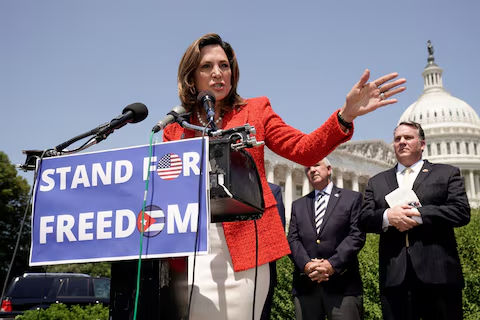
The White House and Congress ultimately determine federal Medicaid policy. Budget proposals often include adjustments to growth rates or funding formulas. These decisions influence state planning cycles and long-term healthcare investments.
Broader Economic Effects
Medicaid cuts extend beyond individual healthcare access. The healthcare sector is a major employer in many communities. Hospitals, clinics, and long-term care facilities create jobs and contribute to local economies.
When funding decreases, job losses and reduced services can ripple through communities. Local businesses that rely on healthcare workers and patients may also experience economic slowdowns.
Additionally, uninsured individuals often delay treatment until conditions worsen. This can lead to higher emergency room use and more expensive interventions later. Preventive care and early treatment are generally more cost-effective than crisis care.
The Policy Debate
Supporters of reducing Medicaid spending argue that reforms can improve efficiency and reduce waste. They suggest that work requirements or block grant funding structures may control costs and encourage state innovation.
Opponents counter that such measures could limit access and increase inequality. They emphasize that Medicaid serves as a safety net during economic downturns when unemployment rises and more individuals qualify for assistance.
The debate often reflects broader philosophical differences about the role of government in healthcare. Some view Medicaid as an essential public service that should be expanded. Others see it as an area requiring tighter fiscal discipline.
Conclusion
Medicaid cuts represent more than a line item in a federal budget. They affect millions of Americans who depend on the program for essential medical services. They also influence state finances, hospital stability, and broader economic health.
As lawmakers continue to debate spending priorities, the outcomes of Medicaid policy decisions will shape healthcare access for years to come. Whether adjustments focus on efficiency, expansion, or reduction, the stakes remain high for families, providers, and communities across the country.