US Myanmar engagement is drawing renewed attention as policymakers, diplomats, and business leaders debate the future of American involvement in the country. The discussion has intensified following calls for increased commercial activity despite ongoing political instability and human rights concerns.
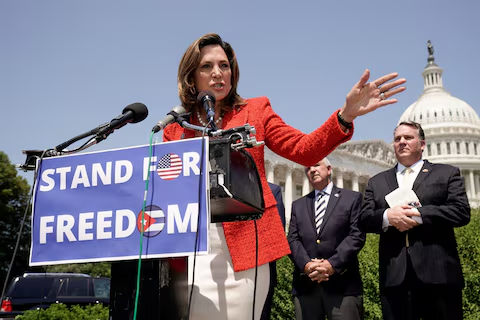
Recent remarks by a former US diplomat have fueled the conversation. She urged American companies to remain in Myanmar and prepare for future opportunities. While her position reflects economic interests, it has also raised concerns among democracy advocates.
US Myanmar Engagement and Business Interests
US Myanmar engagement increasingly intersects with business strategy. Some experts argue that maintaining a commercial presence allows the United States to compete with other global powers, especially China.
Supporters of this approach believe American firms can influence positive change while positioning themselves for long-term growth. They also point out that certain sectors, such as consumer goods and technology, can benefit ordinary citizens.
However, critics warn that expanding business ties without strict safeguards could send the wrong message. They fear it may shift focus away from accountability and human rights.
US Myanmar Engagement and Sanctions Role
US Myanmar engagement cannot be separated from the role of sanctions. Many policymakers stress that sanctions are not designed to immediately remove governments but to uphold global standards and apply pressure over time.
Current measures target key military-linked institutions and revenue sources. These include energy enterprises, financial systems, and supply chains linked to military operations.
Supporters argue that these targeted actions are necessary to limit the military’s financial power. They also emphasize that sanctions reflect international commitment to human rights and rule-based governance.
US Myanmar Engagement Faces Structural Challenges
US Myanmar engagement faces deep structural challenges within the country’s current system. The military controls major economic sectors, including banking and foreign currency flows.
As a result, businesses operating in Myanmar often function within a framework shaped by military influence. This raises concerns about who ultimately benefits from foreign investment.
Labor conditions also remain difficult. Independent unions face restrictions, and workers risk penalties for organizing. These realities complicate efforts to ensure ethical business operations.
US Myanmar Engagement and Legitimacy Risks
US Myanmar engagement carries significant political implications beyond economics. Analysts warn that increased commercial activity could create the appearance of international acceptance.
Such perceptions may weaken global pressure on the ruling authorities. They could also encourage other countries and institutions to normalize relations more quickly.
In addition, visible business activity may increase calls to ease sanctions. This could undermine ongoing efforts to promote accountability and democratic reform.
US Myanmar Engagement and Policy Reform
US Myanmar engagement is also shaping discussions around new policy tools. The proposed BRAVE Burma Act includes plans for a Special Envoy to coordinate sanctions, diplomacy, and humanitarian efforts.
Experts suggest that strong oversight mechanisms are essential. These include transparency requirements, stakeholder consultations, and regular reporting to ensure credibility.
Strengthening these safeguards could help balance engagement with accountability. It may also improve trust among international partners and Myanmar’s pro-democracy groups.
US Myanmar engagement remains a complex and sensitive issue. While economic participation offers potential benefits, it must be carefully balanced with ethical considerations and political realities.
As debates continue, the United States faces a critical choice. Its approach will shape not only its relationship with Myanmar but also its broader commitment to human rights and global stability.