Ford Motor Company’s electric vehicle (EV) ambitions have hit a major roadblock. The automaker has announced it expects to take a staggering $19.5 billion financial hit, primarily due to its electric vehicle operations. This charge marks one of the largest impairments in the company’s history and underscores the significant challenges automakers face in scaling their EV production to meet expectations. As the industry continues to shift towards electric mobility, Ford’s troubles reflect the broader struggles facing the sector.
Ford’s Struggles with the Electric Vehicle Market
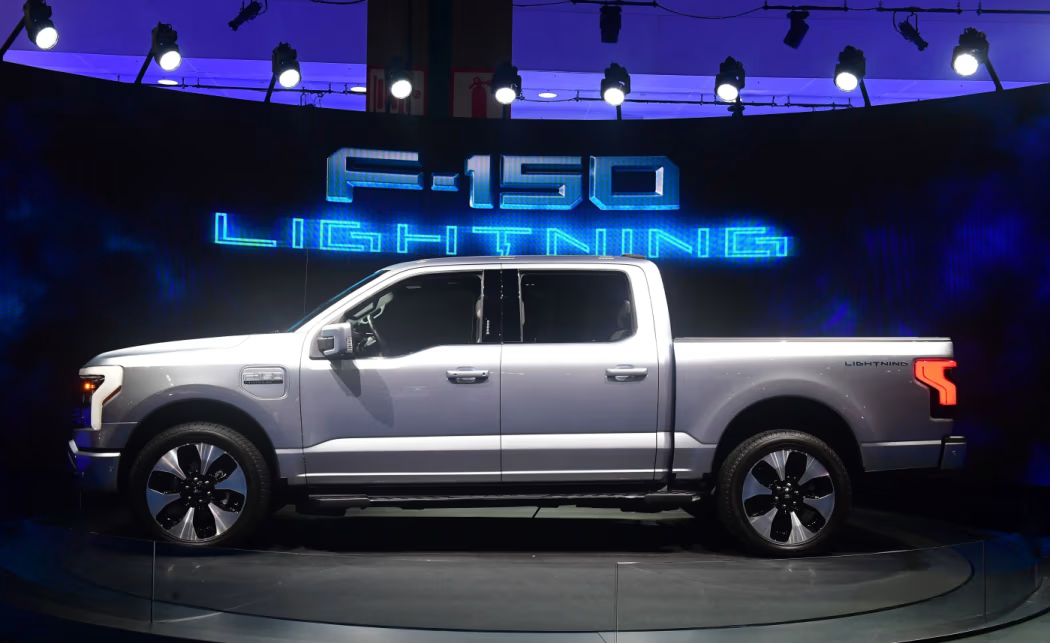
Ford’s electric vehicle push, which had been met with optimism and excitement, now faces a reality check. The company’s foray into EVs included high-profile releases such as the F-150 Lightning, a fully electric version of its best-selling truck, and the Mustang Mach-E, an electric SUV. Despite the fanfare surrounding these vehicles, Ford has been hit hard by disappointing demand and the mounting costs of EV production.
This $19.5 billion charge is a direct consequence of the company’s struggle to make its electric vehicle business profitable. Ford had anticipated that its large investments in electric mobility would pay off quickly, but market conditions, including high manufacturing costs, supply chain disruptions, and lower-than-expected consumer interest, have hindered its progress.
The Realities of Scaling EV Production
The shift from internal combustion engine (ICE) vehicles to electric vehicles has proven to be a massive undertaking for automakers. For Ford, a company with over a century of experience in building gas-powered vehicles, the transition to EVs is no simple task. Manufacturing electric vehicles involves high upfront costs due to the need for specialized components like lithium-ion batteries, which are not only expensive but also subject to volatile pricing based on global supply chains.
Additionally, the supply chain disruptions caused by the global pandemic, as well as the ongoing semiconductor chip shortage, have made it even harder for Ford to meet demand for its electric models. While Ford has ramped up production, the pace of scaling up its EV operations has been slower than expected, leading to higher costs and delayed vehicle deliveries.
Hybrid Vehicles as a Strategic Shift
In response to the challenges in the electric vehicle market, Ford is shifting its focus to hybrid gas-and-electric vehicles. While this might seem like a retreat from its earlier all-in commitment to electric vehicles, it is a practical move to balance consumer demand and production costs.
Hybrid vehicles, which combine both gasoline engines and electric motors, provide a bridge between traditional vehicles and fully electric cars. This allows consumers to enjoy some of the benefits of electric driving—such as reduced emissions and improved fuel efficiency—without fully abandoning the convenience of gasoline-powered engines. By expanding its hybrid offerings, Ford hopes to maintain a strong market presence while continuing to work toward its long-term goal of full electrification.
The EV Market: A Growing but Challenging Sector
Ford is not alone in facing these challenges. The entire auto industry has been grappling with the complexities of transitioning to electric vehicles. Companies like General Motors, Volkswagen, and even Tesla, the leader in the EV space, have all encountered hurdles along the way. For automakers, scaling EV production while keeping costs manageable and meeting consumer demand is proving to be a delicate balancing act.
Demand for electric vehicles is growing, but not at the pace that automakers had anticipated. A significant barrier to wider EV adoption remains the high price point of electric vehicles compared to traditional cars. While the cost of EVs is expected to decrease as production scales and battery technology improves, it’s clear that the transition to a fully electric car market will take longer than many initially forecasted.
Ford’s Strategy Moving Forward
Despite the setback, Ford remains committed to its electric vehicle future. The company has said it will continue to focus on its EV operations while also expanding its hybrid offerings. As part of its ongoing investment, Ford is enhancing its EV infrastructure, including expanding its charging networks and partnering with other tech companies to develop advanced battery technologies.
Ford’s future plans also include the rollout of additional electric models, including an electric version of its iconic Transit van. The company has made a bold bet on electric mobility, with plans to invest $22 billion into electrification by 2025. However, the recent $19.5 billion impairment shows that the path to profitability for Ford’s EV division is fraught with challenges.
In addition to improving its electric vehicle offerings, Ford is also focusing on expanding its autonomous vehicle technology and smart mobility solutions. These initiatives are part of the company’s broader effort to transform itself into a mobility The Long Road to EV Success
Ford’s $19.5 billion charge serves as a wake-up call for the automaker and the entire automotive industry. The electric vehicle market, while full of potential, is proving to be a much tougher nut to crack than expected. The shift toward electrification is not just about producing vehicles—it’s about rethinking manufacturing, supply chains, consumer behavior, and infrastructure.
For Ford, the journey toward EV success will take time. The company will need to navigate production challenges, reduce costs, and build consumer trust in electric vehicles. While the immediate future of Ford’s electric ambitions looks uncertain, the company’s commitment to hybrid solutions and continued investment in EV technology positions it to eventually benefit from the long-term shift toward cleaner, greener transportation.
As Ford moves forward, it will have to balance its legacy in the internal combustion engine market with the future of electric and hybrid mobility. The company’s ability to adapt and scale will determine whether it can emerge as a true leader in the EV revolution, or if it will be left behind by newer, more agile competitors.