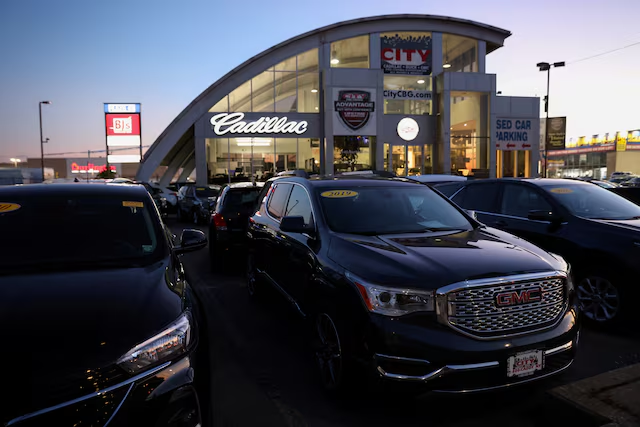
U.S. new car sales rose about 2% in 2025, even as the industry faced supply disruptions, shifting trade policies, and the sudden end of a $7,500 electric vehicle tax credit. Analysts estimate automakers sold roughly 16 million vehicles last year. Gas-powered trucks, SUVs, and hybrids led the rebound, offsetting sharp declines in EV demand.
Indeed, many buyers rushed to dealerships late in the year. They feared new regulations would raise prices further. Although some automakers increased prices on vehicles built overseas, overall vehicle costs rose only modestly. The average new-vehicle transaction price in December reached $47,104—just $715 higher than a year earlier.
Still, affordability remains a critical barrier. High monthly payments have priced out many budget-conscious shoppers. As a result, these buyers now sit on the sidelines entirely. Industry leaders acknowledge this challenge and expect lawmakers to scrutinize it closely in early 2026.
Nowhere was the market more volatile than in the electric vehicle segment. After federal EV tax credits vanished and emissions rules relaxed, consumer interest cooled fast. Consequently, EVs made up only 6.6% of December retail sales—down from 11.2% a year before.
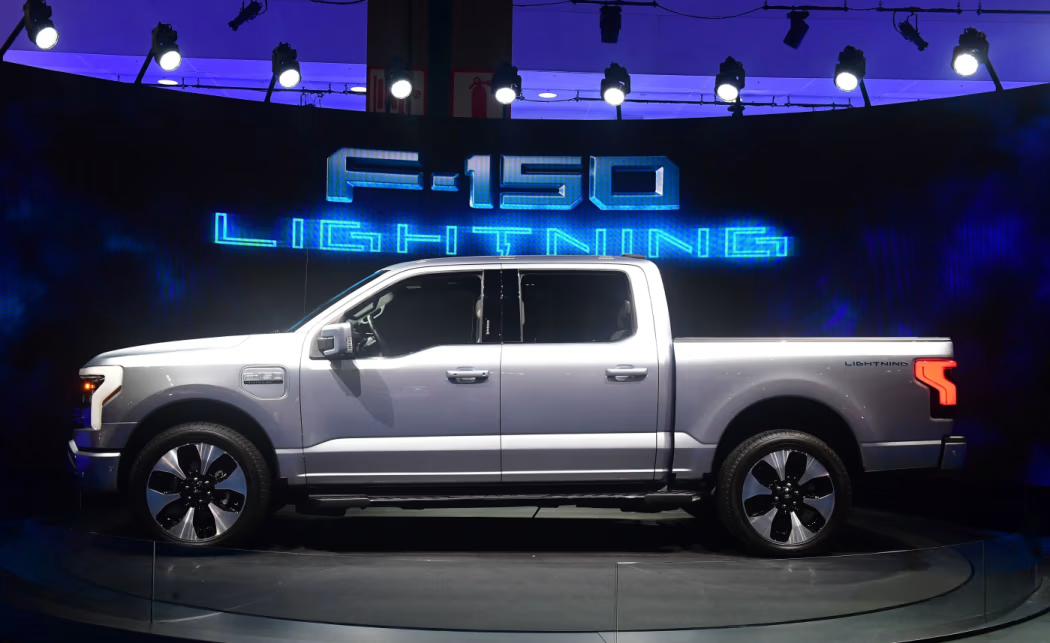
Automakers responded by scaling back ambitious EV plans. General Motors redirected several factories from EV production to gas-powered models. It also reported a $1.6 billion charge tied to this strategic shift. Ford canceled the fully electric F-150 Lightning and scrapped plans for a next-generation electric truck and van—taking a $19.5 billion hit. Stellantis similarly ended major EV programs during the year. Executives cited changing market conditions and customer feedback as key reasons for the pivot.
Looking ahead, experts disagree on the trajectory of U.S. new car sales in 2026. Some forecast a modest decline, citing economic uncertainty and weaker EV incentives. Others believe lower interest rates and a surge in lease returns could support demand. These expiring leases may ease used-car shortages and indirectly boost new-vehicle purchases.
Moreover, hybrids and efficient gas models continue gaining traction. They offer consumers a middle ground—lower emissions without the range anxiety or charging hurdles of full EVs. This trend may sustain overall sales even if EV adoption stalls further.
For investors and buyers alike, the auto market now hinges on affordability, policy clarity, and interest rates. If financing costs drop and wages keep pace with inflation, U.S. new car sales could stabilize or even grow in the second half of 2026.
In conclusion, 2025 proved surprisingly resilient for the U.S. auto industry—not because of EVs, but despite them. Gas and hybrid vehicles carried the market through turbulence. As automakers recalibrate, the focus shifts to building cars that real buyers want, can afford, and feel confident purchasing. That balance will define success in 2026.
READ: Most Overbought and Oversold Stocks in the S&P 500 as 2026 Begins