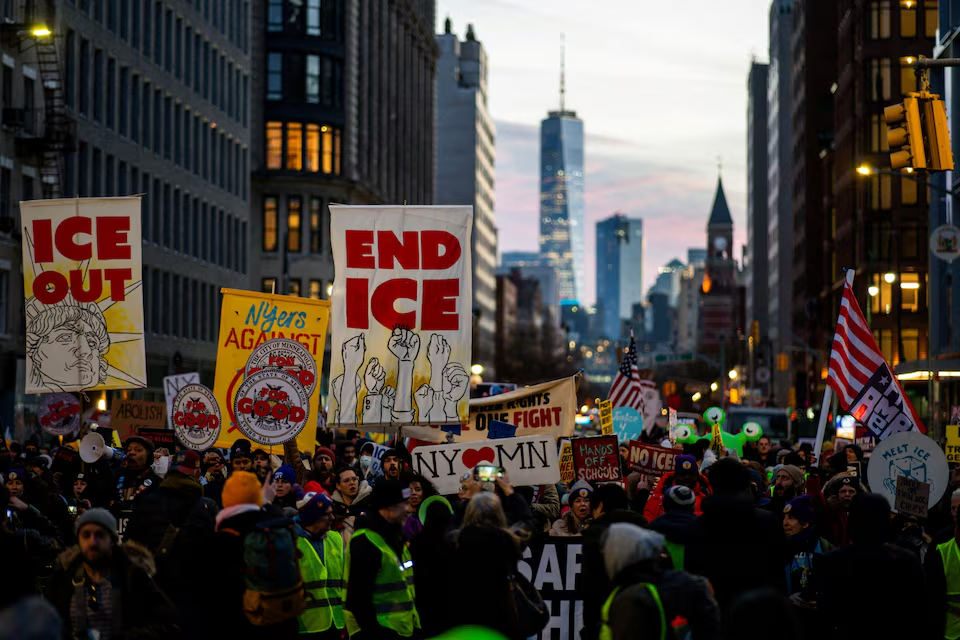
President Donald Trump’s signature immigration agenda now presents a significant political vulnerability. His aggressive immigration tactics midterm risk alienating crucial independent voters. A new Reuters/Ipsos poll shows only 39% of Americans approve of his handling of immigration. This marks the lowest rating since his 2025 inauguration. While his base remains largely supportive, unease is growing over enforcement methods. The fatal shootings of civilians in Minneapolis by federal agents ignited national outrage. Consequently, Republican strategists are sounding alarms about November’s elections. The very issue that propelled Trump back to power is becoming a liability. This shift could undermine GOP efforts to retain control of Congress.
Democratic operatives see a clear opportunity to mobilize their voters. They aim to capitalize on the public’s discomfort with the administration’s approach. Meanwhile, some Republican officials are publicly pushing back against the tactics. A GOP candidate for Minnesota governor even abandoned his race in protest. The political landscape is demonstrating rapid volatility. Voter sentiment appears to be recalibrating around perceived government overreach. The White House has taken note, initiating internal strategy discussions. Trump has subtly softened his tone and adjusted personnel. The immediate future of Operation Metro Surge is now under review. This immigration tactics midterm risk is the central calculation for both parties.
Polling Reveals Deepening Voter Unease
The data reveals a stark warning for the president’s party. Although 84% of Republicans still support Trump on immigration, a critical fifth believe agents have gone “too far.” This fissure within the coalition is politically dangerous. Independent voters, essential for winning competitive districts, show greater disapproval. Their discomfort stems from the scope and violence of recent operations. The deaths of Renee Good and Alex Pretti in Minneapolis became focal points. Images of masked agents clashing with protesters dominate news cycles. This visual narrative is overpowering the administration’s messaging on border security. The immigration tactics midterm risk is therefore not about policy goals but implementation. Voters who desire orderly immigration laws are alarmed by chaotic enforcement.
Republican Fractures and Strategic Recalculations
The unified GOP front on immigration is showing cracks. Several Republican governors and lawmakers have expressed concern privately and publicly. State Senator Zach Duckworth, a Republican, objected to federal officials labeling a deceased protester a “domestic terrorist.” He represents suburban Minneapolis constituents who are now reconsidering their support. This immigration tactics midterm risk is pushing the party into a difficult debate. Should they double down on hardline enforcement or pivot to a more targeted approach? Inside the White House, advisers are reportedly discussing a narrower focus. The potential reduction of agents in Minnesota and a renewed emphasis on criminal deportations are on the table. The political survival of vulnerable incumbents may depend on this recalibration.
The Minneapolis Flashpoint and National Recoil
Operation Metro Surge was intended as a show of force. The deployment of nearly 3,000 federal agents to Minnesota in December aimed to deter illegal immigration inland. Instead, it created a public relations disaster and a humanitarian crisis. The operation’s aggressive posture led to violent confrontations with peaceful demonstrators. The resulting fatalities triggered a national reassessment of ICE’s methods. For many Americans, the issue transformed from an abstract border concern to a concrete civil liberties question. This shift fundamentally altered the political calculus. The administration’s effort to regain control includes dispatching a border czar and seeking cooperation with state officials. Whether these steps can mitigate the immigration tactics midterm risk remains an open question.
Democratic Strategy: Mobilization Versus Overreach
Democratic strategists believe the current climate offers a powerful turnout tool. Michael LaRosa, a former Biden official, argues overwhelming opposition to the crackdown will drive progressives and moderates to the polls. The party plans to frame the election as a referendum on authoritarian overreach. However, pollster Scott Rasmussen warns Democrats risk misdiagnosing the moment. The public’s unease is with tactics, not necessarily with the goal of immigration enforcement. Americans still broadly distrust Democrats on border security, a lingering effect of the Biden era. The challenge for the party is to channel outrage without appearing to support open borders. Their success in navigating this will determine if the immigration tactics midterm risk translates into actual GOP losses.
The Base Holds But Fears Electoral Consequences
Interviews with Trump supporters in areas like Delano, Minnesota, confirm core base loyalty. These voters stand squarely behind the president’s crackdown and plan to vote Republican. Yet, even they acknowledge operational failures. Concerns about poor agent training and preparation are common. Their primary worry is that the controversy will depress turnout among less-committed conservatives or push independents toward Democrats. Jake Blackowiak, a 33-year-old supporter, voiced the pragmatic fear of a stalled agenda if Congress flips. This internal acknowledgment highlights the complex nature of the immigration tactics midterm risk. The base’s support is solid, but it is not sufficient to win majorities alone. The suburban voter exodus witnessed in past cycles could repeat.
Historical Precedent and the Path Forward
Immigration politics have always been volatile, but enforcement actions on U.S. soil carry unique perils. The ghost of past controversies, like family separations, lingers in the national memory. Former Republican congressman Gil Gutknecht advises the White House to clarify its targets precisely, avoiding exaggeration. The coming months will test whether the administration can refocus its message on “the worst of the worst,” as strategist Giancarlo Sopo advised. The margin for error is now slim. Any further incident of perceived overreach could cement the immigration tactics midterm risk as an election-defining liability. Conversely, a disciplined, targeted approach could stabilize Republican fortunes. The political trajectory hinges on operational control and messaging discipline the administration has yet to consistently demonstrate.
The midterm elections are often a referendum on the president’s performance. The immigration issue, once a Trump trump card, has become dangerously double-edged. Republican candidates in swing districts must now decide how closely to tie themselves to the Minneapolis operations. Democratic candidates must balance condemnation with credible policy alternatives. The electorate’s final judgment will rest on which party better addresses the twin desires for security and humane governance. The unfolding situation guarantees immigration will remain at the forefront of the national conversation until November. The ultimate cost of the current strategy will be counted in votes.