The future of work in America is undergoing a transformation driven by advancements in artificial intelligence (AI) and automation. These technologies are reshaping industries, redefining job roles, and changing the way people work. As businesses strive for greater efficiency and productivity, the adoption of AI and automation is becoming essential across various sectors, from manufacturing and healthcare to retail and customer service.
By 2026, the workplace will look vastly different, with AI and automation integrated into nearly every aspect of work. While these technologies promise increased productivity and economic growth, they also present significant challenges, particularly in terms of workforce displacement and the need for reskilling.
In this article, we explore the impact of AI and automation on the future of work in America, the industries most affected, and the opportunities and challenges that lie ahead.

1. AI and Automation: Drivers of Productivity and Efficiency
AI and automation are enabling businesses to achieve new levels of productivity and efficiency. In industries such as manufacturing, automation has already streamlined production lines, reduced human error, and improved safety. By 2026, we can expect AI and robotics to take on even more complex tasks, further enhancing manufacturing processes and pushing the boundaries of what’s possible in terms of speed and precision.
In the service sector, automation tools like chatbots, virtual assistants, and AI-driven customer support systems are already improving response times and customer experiences. As AI technology evolves, these systems will become more intelligent, capable of handling more intricate tasks like troubleshooting technical issues and personalizing recommendations.
For businesses, the integration of AI and automation reduces costs and increases profitability. For workers, however, this shift raises questions about job security and the role of humans in the workforce.
2. Job Displacement and the Need for Reskilling
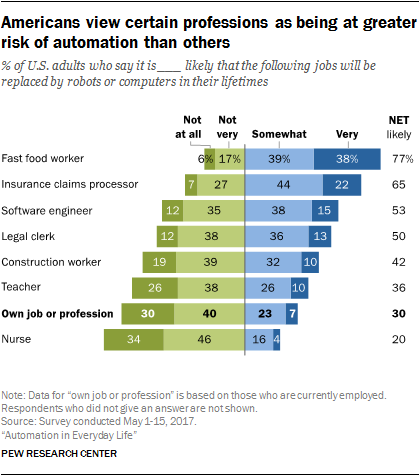
While AI and automation hold the promise of boosting productivity, they also pose a significant risk of job displacement. In industries like retail, customer service, and transportation, many routine, repetitive tasks are increasingly being performed by machines. In 2026, we expect that more jobs in fields like data entry, manufacturing, and basic customer support will be automated, reducing the need for human labor.
According to a report by McKinsey, up to 14% of the global workforce could be displaced by automation by 2030. In America, sectors such as transportation (autonomous trucks and self-driving vehicles), administrative support, and retail (self-checkout systems) are likely to see the most significant impacts.
However, the rise of automation does not mean a future devoid of human workers. Instead, it emphasizes the need for reskilling. In response to job displacement concerns, the workforce will need to adapt by acquiring new skills, particularly those related to AI, programming, data analysis, and digital literacy.
Reskilling initiatives and upskilling programs offered by employers, governments, and educational institutions will be essential in helping workers transition into new roles. The demand for tech-savvy professionals, such as AI specialists, robotics engineers, and data scientists, will continue to grow, creating new career opportunities in sectors that didn’t exist a decade ago.
3. AI and Automation in Healthcare: A New Era of Care
In the healthcare industry, AI and automation are set to transform the way medical professionals diagnose, treat, and care for patients. AI algorithms are already being used to analyze medical images, identify patterns in patient data, and predict health outcomes. By 2026, AI-powered diagnostic tools will likely become even more accurate and widespread, enabling faster diagnoses and improving patient outcomes.
Additionally, automation in healthcare, such as robot-assisted surgeries and automated administrative tasks, will allow healthcare providers to allocate more time to patient care rather than routine office work. AI-driven systems will also help healthcare professionals make more informed decisions by analyzing vast amounts of medical data and offering personalized treatment options.
While these advancements hold great promise for improving healthcare efficiency and accessibility, they will also require new roles and specialized skills. Healthcare workers will need to be trained to work alongside these AI-driven systems, ensuring that technology enhances rather than replaces the human element in care.
4. The Gig Economy: A Shift Towards Flexibility and Autonomy
Another significant trend in the future of work is the rise of the gig economy, which is closely linked to automation and AI. The gig economy refers to a labor market characterized by short-term contracts, freelance work, and part-time jobs rather than permanent, full-time positions. In 2026, AI-powered platforms will further facilitate gig work by automating administrative tasks, matching workers with clients, and managing payments.
For many, gig work offers the flexibility to choose when, where, and how they work. As automation reduces the need for certain full-time roles, more individuals may turn to gig work as a way to earn income while maintaining autonomy. Additionally, AI-driven platforms will enable gig workers to find work faster and more efficiently, making gig-based employment more accessible.
However, this shift also raises concerns about job stability, benefits, and worker rights. Gig workers often lack the same protections and benefits that full-time employees receive, such as healthcare, retirement plans, and paid time off. In 2026, there will likely be increased calls for legislation to address these gaps and ensure fair wages and protections for gig workers.
5. AI and Automation’s Impact on Work-Life Balance
AI and automation could also improve work-life balance by taking over time-consuming tasks, allowing workers to focus on higher-value, creative, or strategic activities. With AI handling routine administrative work, such as scheduling, reporting, and customer queries, employees may be able to spend more time on tasks that require critical thinking and human interaction.
Moreover, automation could reduce work hours by enabling businesses to operate more efficiently. However, the pressure to keep up with technological advancements may also lead to longer hours for workers in industries that require constant monitoring of automated systems.
The challenge will be finding a balance between reaping the benefits of AI and automation while ensuring that workers are not overwhelmed by the rapid pace of change.
Conclusion
The future of work in America is being shaped by the rapid growth of AI and automation technologies. These innovations promise significant benefits, from increased productivity and improved healthcare to enhanced work flexibility and opportunities for new career paths. However, they also present challenges, particularly regarding job displacement and the need for widespread reskilling.
As we look toward 2026, the workforce will need to adapt to these changes by embracing lifelong learning, acquiring new skills, and being open to new forms of work. With the right policies and investments in workforce development, America can harness the power of AI and automation to create a more dynamic, inclusive, and prosperous future of work.