Artificial Intelligence (AI) is no longer just a futuristic concept; it is now a driving force in reshaping industries, economies, and everyday life. By 2026, AI is set to have an even greater impact on the United States, providing new opportunities for innovation, job creation, and economic growth. At the same time, the rapid development of AI presents significant challenges related to ethics, security, and workforce displacement.
In this article, we explore the key opportunities and challenges AI will bring to America in 2026, examining how this technology will transform sectors like healthcare, finance, and manufacturing, while also addressing the ethical and social implications of its widespread use.
Opportunities: How AI Will Shape America’s Future
1. AI in Healthcare: Revolutionizing Diagnosis and Treatment
One of the most exciting opportunities AI brings to America is its potential to revolutionize the healthcare industry. In 2026, AI-powered tools will play a critical role in diagnosing diseases, creating personalized treatment plans, and improving patient care. AI algorithms will analyze vast amounts of medical data, such as medical images, patient histories, and genetic information, to identify patterns and make predictions that would be impossible for human doctors to spot.
AI will also be used in drug discovery, significantly accelerating the process of developing new treatments. With the ability to simulate molecular interactions, AI could help researchers find effective treatments for diseases like cancer, Alzheimer’s, and rare genetic disorders. Personalized medicine, powered by AI, will provide tailored treatments that consider an individual’s genetic makeup, improving patient outcomes and reducing side effects.
2. AI and Automation: Boosting Productivity Across Industries
By 2026, AI-powered automation will have permeated various sectors, from manufacturing to customer service. In industries like automotive, logistics, and retail, AI-driven robots and systems will handle repetitive and labor-intensive tasks, boosting productivity and reducing operational costs.
For example, autonomous vehicles and drones will become integral in transportation and delivery services, improving efficiency in shipping and reducing human error. Similarly, in manufacturing, AI systems will manage supply chains, monitor equipment performance, and even predict maintenance needs, minimizing downtime and enhancing production rates.
In the finance sector, AI will be used for tasks such as fraud detection, portfolio management, and customer service, allowing companies to provide faster and more personalized services while reducing human involvement in routine tasks.
3. Job Creation and Economic Growth
Although AI is often associated with job displacement, it is also expected to create a significant number of jobs in the coming years. In 2026, the demand for AI specialists, data scientists, and AI-related professionals will skyrocket, providing opportunities for workers with skills in machine learning, natural language processing, and robotics.
Additionally, AI will enable new industries to emerge, creating roles that we cannot yet imagine. The continued development of AI-driven applications will lead to a surge in demand for experts who can create, implement, and maintain these systems. Education and training in AI and data science will be key to equipping the workforce for the new opportunities that arise.
Challenges: The Ethical and Social Implications of AI
1. Job Displacement and Workforce Transformation
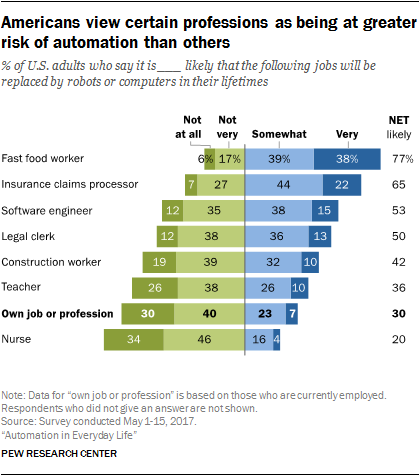
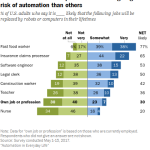
One of the major challenges of AI in America is its potential to displace workers, especially in industries that rely on routine, manual labor. By 2026, automation and AI-driven technologies could replace jobs in sectors such as transportation, customer service, and manufacturing, leaving millions of workers at risk of unemployment or underemployment.
However, this challenge also presents an opportunity for workforce transformation. The US will need to invest in reskilling and upskilling programs to help workers transition into new roles created by AI and automation. Government and corporate partnerships will be crucial in ensuring that displaced workers have access to the training they need to thrive in the AI-driven economy.
2. Ethical Concerns and AI Bias
As AI systems become more integrated into everyday life, ethical concerns will continue to grow. One of the most significant issues is bias in AI algorithms. AI systems are trained on data, and if that data reflects historical biases—such as racial, gender, or socioeconomic disparities—the AI models may perpetuate or even exacerbate these biases.
In 2026, it will be crucial for companies and regulators to address these concerns by ensuring that AI systems are transparent, fair, and accountable. Efforts to reduce bias in AI models, through diverse datasets and ethical guidelines, will be necessary to build trust in AI technologies and ensure they benefit everyone equally.
Another ethical challenge is privacy. AI systems often rely on vast amounts of personal data, raising concerns about data security and surveillance. Striking a balance between leveraging data for innovation and protecting individual privacy will be essential in the development of AI policies moving forward.
3. Security Risks and AI-Driven Cyberthreats
AI also presents a growing security risk. While AI can enhance cybersecurity by detecting threats in real time and protecting against cyberattacks, it can also be used by malicious actors to create more sophisticated and targeted attacks. AI-driven deepfakes, phishing attacks, and automated cyberattacks are becoming increasingly difficult to detect, posing a significant challenge to cybersecurity professionals.
By 2026, it will be essential for the US to invest in AI-driven cybersecurity solutions to defend against these evolving threats. As AI becomes a critical tool in both offense and defense, the need for robust AI-powered security systems will only increase.
4. Regulation and Governance of AI
As AI continues to evolve, there will be growing calls for regulation and governance to ensure that AI technologies are developed and deployed ethically and responsibly. By 2026, the US government and international bodies will likely introduce new policies and frameworks to govern the use of AI in areas such as healthcare, finance, transportation, and military applications.
Establishing clear regulations will be necessary to balance innovation with accountability. Policymakers will need to collaborate with technologists, ethicists, and other stakeholders to ensure that AI development aligns with the broader societal good.
Conclusion
AI presents both tremendous opportunities and significant challenges for America in 2026. From transforming industries and driving economic growth to addressing ethical and social issues, AI will shape the future of work, healthcare, and daily life. To fully realize the benefits of AI, the US will need to navigate these challenges carefully, investing in workforce reskilling, ethical AI development, and robust cybersecurity systems.
As AI continues to evolve, it holds the potential to improve quality of life, drive innovation, and enhance productivity. However, ensuring that these technologies are used responsibly and equitably will require ongoing collaboration between government, industry, and society at large. The future of AI in America is bright, but it must be guided by careful thought, inclusive policies, and a commitment to fairness.