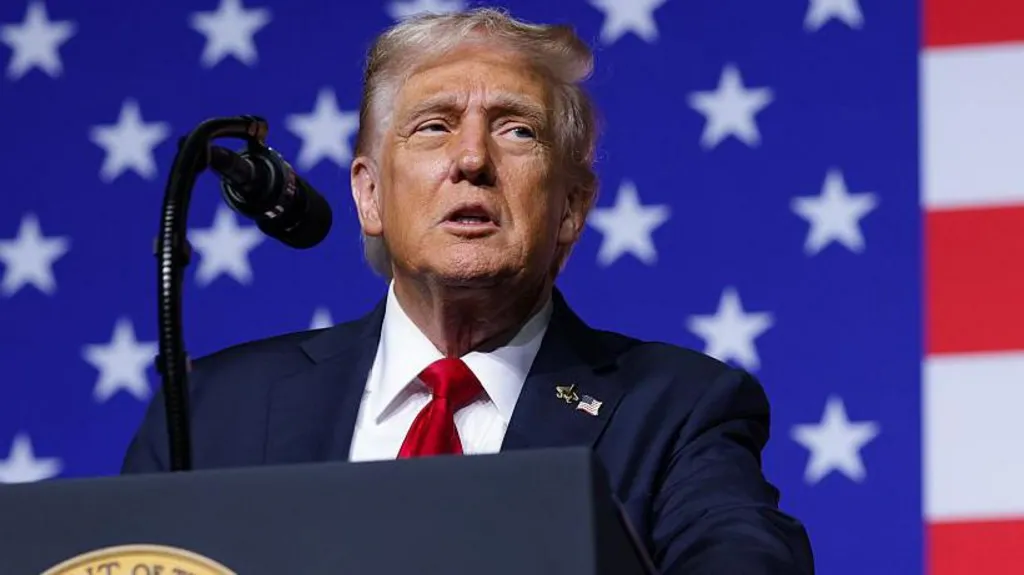
President Donald Trump has called for a historic military spending increase. He proposes raising the U.S. defense budget to $1.5 trillion by 2027. This figure is over 50% higher than the current $901 billion allocation. Trump stated this buildup is essential for “these very troubled and dangerous times.” Furthermore, he claims it will fund the “Dream Military” America is entitled to, ensuring safety from any foe.
Funding the Massive Budget Increase
A central question is how to finance such a dramatic expansion. Trump asserts that tariff revenues can fund this massive military spending increase. He argues that money collected from import duties provides a viable revenue stream. However, economists have repeatedly warned about the unsustainable U.S. fiscal gap. This proposal signals a clear prioritization of defense, potentially at the expense of other budgetary areas.
Pressure on Defense Contractors and Executive Pay
Alongside the budget call, Trump issued a sharp warning to defense firms. He criticized slow production speeds and exorbitant executive pay packages. In social media posts, he demanded companies accelerate arms deliveries and invest in new plants. Trump specifically called out Raytheon as the “least responsive” contractor. He threatened to halt business with the Department of War unless they invest more in capacity. Consequently, shares in major contractors like Lockheed Martin and Northrop Grumman rose over 5%.
Strategic Context and Global Tensions
This push for higher spending occurs amid rising global instability. Recent events underscore the tense backdrop. The U.S. military recently captured a Russian-flagged tanker for sanctions violations. Additionally, U.S. forces seized Venezuelan leader Nicolás Maduro. In Asia, China conducted military drills around Taiwan, simulating a blockade. These actions highlight the perceived need for a stronger U.S. military posture that Trump’s plan addresses.
The “Dream Military” Vision and Congressional Hurdles
Trump’s vision is not just about more money, but transformative capability. The “Dream Military” concept implies next-generation technology, readiness, and scale. However, Congress must approve any budget. The current $901 billion budget passed only after significant negotiation. A jump to $1.5 trillion would face intense scrutiny over fiscal responsibility and strategic necessity. For historical context on U.S. defense expenditures, see the Peter G. Peterson Foundation’s analysis.
Market and Industrial Base Implications
The announcement immediately impacted financial markets. Defense stocks surged, reflecting anticipation of increased contracts. Yet, Trump’s conditions create uncertainty. His demand to cap executive pay at $5 million and limit shareholder buybacks targets corporate governance. The goal is to redirect capital into factories and equipment. This could reshape the defense industrial base if enforced.
A Sustained Push for Allied Burden-Sharing
Trump’s proposal continues his long-standing policy of demanding more from allies. Since his first term, he has pressured NATO countries to meet 2% GDP spending targets. This record military spending demand for the U.S. may be paired with renewed calls for allied contributions. The combined effect would aim for a global net increase in defense capabilities among Western allies.
Conclusion: A Defining National Security Proposal
President Trump’s call for a military spending increase to $1.5 trillion is a defining policy marker. It ties national security directly to economic policy via tariffs. The plan also challenges the defense industry’s financial practices. While promising a stronger military, it invites major fiscal and political debates. As global tensions flare, the argument for a “Dream Military” will resonate with many. However, its feasibility hinges on controversial funding and a compliant Congress. Ultimately, this proposal sets the stage for a pivotal conflict in U.S. budget and security policy.