The European Parliament is set to suspend its approval process for a major trade agreement with the United States. This decision marks a sharp escalation in transatlantic tensions. The move is a direct response to President Donald Trump’s recent threats to acquire Greenland and impose tariffs on eight European nations. Consequently, the planned suspension has immediately rattled global financial markets, reviving fears of a full-scale trade war. Stock indices in the US and Europe fell sharply as investors sought safety in assets like gold.
The trade deal, struck in July 2025 at Trump’s Turnberry golf course, had eased earlier tensions. It set US tariffs on most European goods at 15%, down from a threatened 30%. In return, Europe agreed to investment and regulatory changes benefiting US exports. However, the agreement required final approval from the European Parliament. Now, key lawmakers say they cannot proceed while the US threatens an EU member state’s sovereignty. This impending suspension throws the entire deal into jeopardy and opens the door to European retaliation.
Political Rationale and Key Statements
Influential European lawmakers have been clear about their reasoning. Manfred Weber, a senior German MEP, stated approval is “not possible at this stage.” Bernd Lange, Chair of the Parliament’s International Trade Committee, was more definitive. He declared there is “no alternative” but to suspend work on the Turnberry proposals. Lange cited the US threat to Denmark’s territorial integrity and the use of tariffs as coercion. He stated work would remain suspended until the US re-engages on a path of cooperation.
This political stance transforms a trade agreement into a test of geopolitical principles. European leaders are framing the US threats as an attack on the bloc’s fundamental unity and sovereignty. French President Emmanuel Macron, speaking in Davos, called the tariff accumulation “fundamentally unacceptable.” The EU now faces a deadline: a suspended package of retaliatory tariffs on €93 billion of US goods is set to automatically activate on February 7 unless the deal is approved or extended.
Immediate Market Reaction and Safe-Haven Surge
Financial markets reacted with pronounced risk-off sentiment. On Tuesday, the Dow Jones fell over 1.7%, the S&P 500 dropped more than 2%, and the Nasdaq closed about 2.4% lower. European markets also recorded a second consecutive day of losses. Meanwhile, safe-haven assets surged. The price of gold broke above $4,800 per ounce for the first time ever. Silver also hovered near record highs above $94 an ounce, reflecting deep investor anxiety.
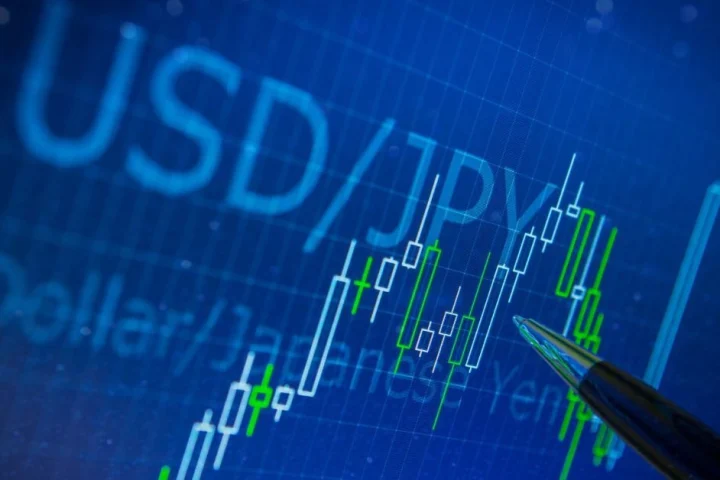
The US dollar experienced its largest daily drop since early December, falling 0.5% overnight. This currency movement suggests markets are pricing in potential economic disruption and questioning the dollar’s near-term strength. Asian markets were mixed in response, with Japanese and Australian indices slightly lower while Chinese shares gained. The broad market unease underscores how tightly linked US-European trade stability is to global financial confidence.
The Path to Retaliation and US Warnings
The suspension directly leads to the question of European retaliation. The EU’s “anti-coercion instrument,” dubbed a “trade bazooka,” is now a live option. This tool could restrict US access to EU public tenders, investments, and digital services. With the February 7 deadline looming, the bloc must decide whether to enact tariffs or seek another delay. Macron has explicitly urged consideration of all retaliatory options.
US officials in Davos issued stern warnings against such a move. Treasury Secretary Scott Bessent advised European leaders to “have an open mind” and not retaliate. Commerce Secretary Howard Lutnick and Trade Representative Jamieson Greer indicated the US would not let retaliation go unanswered. Greer ominously remarked that when countries don’t follow his advice, “crazy things happen.” This exchange sets the stage for a potential tit-for-tat escalation if the EU proceeds with tariffs.
Broader Context and Global Trade Implications
The US and EU are each other’s largest trading partners, exchanging over €1.6 trillion in goods and services annually. A breakdown in this relationship would send shockwaves through the global economy. The situation also tests the resolve of other “middle powers.” Canadian PM Mark Carney, in a Davos speech, warned against bilateral negotiations with a hegemon from a position of weakness. He urged unity to avoid a “might-makes-right” world order.
Further complexity comes from a pending US Supreme Court decision on the legality of Trump’s 2025 “Liberation Day” tariffs. A ruling against the administration could upend the legal basis for many trade measures. For now, the immediate crisis centers on Europe’s decision to suspend US trade deal approval. This move demonstrates that geopolitical ambitions, like the push for Greenland, can directly unravel hard-won economic diplomacy, with global markets bearing the immediate cost.